Car Rentals Across Japan
From Tokyo’s urban expressways to Hokkaido’s open roads, Kyoto’s temple lanes to Okinawa’s coral coast — kei cars, hybrids and EVs with English GPS.
The Art of Getting Lost in Japan
Japan’s legendary public transport is extraordinary within cities — but it is the country’s secret geography that only a rental car reveals. The mountain onsen town no bus serves. The coastal road between Hokkaido fishing villages at sunrise. The Shirakawa-go thatched farmhouses in the valley between two expressways. The abandoned cape lighthouse accessible only on gravel. For all of these, the freedom of your own vehicle is transformative in a way that no railway timetable can replicate.
Japan’s rental market is among the world’s most sophisticated. Toyota Rent-a-Car, Nissan Rent-a-Car, Times Car Rental and Orix Rent-a-Car operate fleets of immaculate, comprehensively insured vehicles at every airport. English GPS navigation is standard. ETC electronic toll cards save 30% on motorway costs. And kei cars — Japan’s unique 660cc ultra-compacts — open narrow rural roads and tight historic city lanes that standard vehicles cannot easily navigate.
International Driving Permits are mandatory for most foreign visitors. Japan operates under the 1949 Geneva Convention IDP framework — USA, UK, Canada, Australia, India and most countries must obtain an IDP from their national automobile association before travelling. Exceptions include Germany, Switzerland, France, Belgium and Taiwan, which require only an official Japanese translation.
English GPS Standard
All rental vehicles include English-language GPS with Japanese addresses, temple names and expressway guidance.
ETC Toll Card Available
Save 30% on expressway tolls. ETC cards allow seamless passage through dedicated fast lanes on all Japanese motorways.
Kei Car Specialists
Japan’s unique 660cc ultra-compacts from ¥5,000/day. Perfect for narrow rural roads, historic cities and tight parking.
Hybrid Fleet
Toyota Prius, Aqua and Honda Fit hybrids for outstanding fuel economy across Japan’s mountainous terrain.
Snow Tyre Service
Winter-tyred vehicles for Hokkaido, Tohoku and mountain regions from November to April. Essential for safe winter driving.
24/7 English Support
Round-the-clock English-speaking helpline. Emergency roadside assistance across all regions including remote islands.
Kei Car vs Standard Compact — Which is Right for You?
| Factor | Kei Car (轺遇車) | Standard Compact Hybrid |
|---|---|---|
| Daily Rate | ✓ ¥5,000–6,000 — Cheapest option | ¥7,000–9,000 — Most popular choice |
| Fuel Economy | ✓ Excellent: 20–25 km/L | ✓ Hybrid: 20–30 km/L |
| Toll Cost | ✓ 20% cheaper via ETC kei discount | Standard ETC rate — still 30% saving |
| Narrow Roads | ✓ Ideal for Kyoto lanes, rural paths | Manageable but occasionally tight |
| Highway Performance | ⚠ Struggles above 100 km/h (660cc) | ✓ Comfortable at 100–120 km/h |
| Passenger Space | 2 adults comfortably, 3–4 cramped | ✓ 4 adults with luggage |
| Luggage | 1–2 small bags only | ✓ 2–3 full-size cases |
| Parking | ✓ Fits Japan’s notoriously tight spaces | Standard parking (often already tight) |
| Best For | ✓ Solo/couple, Kyoto, rural, budget touring | ✓ Families, highways, comfort, luggage |
| Examples | Honda N-Box, Suzuki Alto, Daihatsu Mira | Toyota Aqua, Nissan Note, Honda Fit |
27 Rental Solutions for Every Japanese Journey
Kei cars for Kyoto’s lanes, hybrids for Mt. Fuji, snow-tyred 4WDs for Hokkaido — the right vehicle for every region of Japan

Kei Car Rental (轺遇車)
Honda N-Box, Suzuki Alto, Daihatsu Mira from ¥5,000/day. Japan’s unique ultra-compacts for narrow roads, cheap tolls and tight parking.
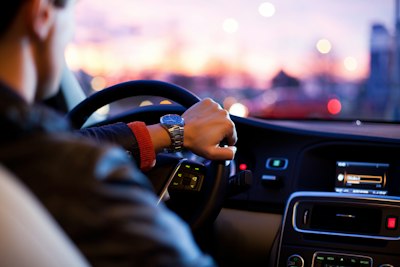
Chauffeur-Driven Service
Professional English-speaking drivers across Tokyo, Osaka and Kyoto for business meetings and private temple tours.
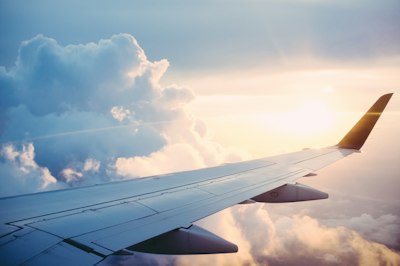
Airport Transfers
Meet-and-greet at Narita, Haneda, Kansai International, New Chitose and Fukuoka airports 24/7.
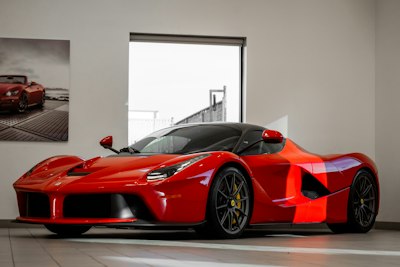
Luxury Car Rental
Lexus LS, Toyota Crown, Mercedes-Benz for business travel, Tokyo to Kyoto Shinkansen connections and corporate hospitality.
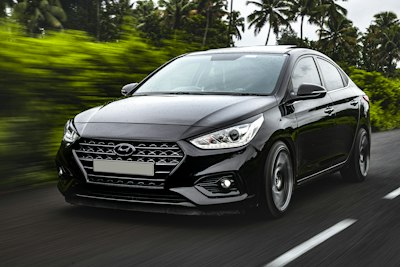
SUV & 4WD Rental
Toyota RAV4, Subaru Forester, Honda CR-V for Hokkaido off-road, mountain passes and rural Kyushu exploration.
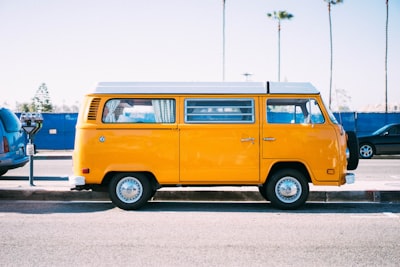
Corporate Car Rental
Monthly fleet contracts for businesses in Tokyo’s Marunouchi, Osaka’s Umeda and Nagoya’s Sakae districts.

Sports Car Rental
Mazda MX-5, Toyota GR86, Nissan Z for Hakone mountain passes and Japan’s legendary winding coastal roads.

Minivan & MPV Rental
Toyota Noah, Nissan Serena, Honda Step Wagon for family touring across Japan’s multiple regions.

Wedding Car Rental
White Rolls-Royce, classic Mercedes and decorated Japanese bridal cars for Shinto shrine and Western-style weddings.

Long-Term Rental
Monthly contracts with unlimited mileage for expats, English teachers (ALTs) and international professionals in Japan.
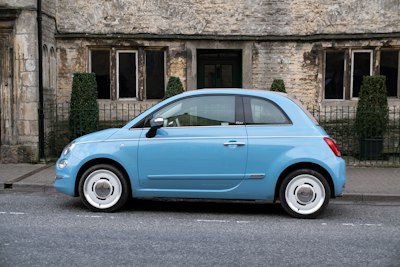
Hybrid & EV Cars
Toyota Prius, Nissan Leaf, Tesla Model 3. Japan’s charging network is exceptional — 40,000+ fast chargers nationwide.
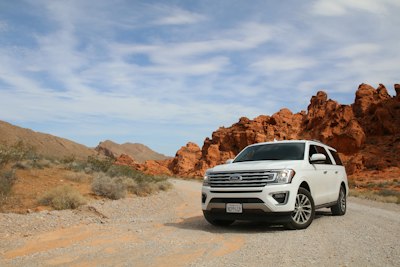
Road Trip Packages
Golden Route (Tokyo–Mt. Fuji–Kyoto–Nara), Hokkaido Circuit, Okinawa Island Loop — curated with unlimited km.

Budget Compact Rental
Toyota Vitz, Honda Fit from ¥6,500/day. Practical compact dimensions for city driving and suburban Japan.

Hourly Car Rental
Rent by the hour in Tokyo and Osaka. Timescar Share and Careco carshare networks for flexible urban mobility.

Station Wagon Rental
Toyota Corolla Touring, Subaru Outback with generous boot space for ski equipment and Hokkaido camping gear.

Cargo Van Rental
Toyota HiAce, Nissan Caravan for business logistics, trade fair transport and equipment delivery across Japan.
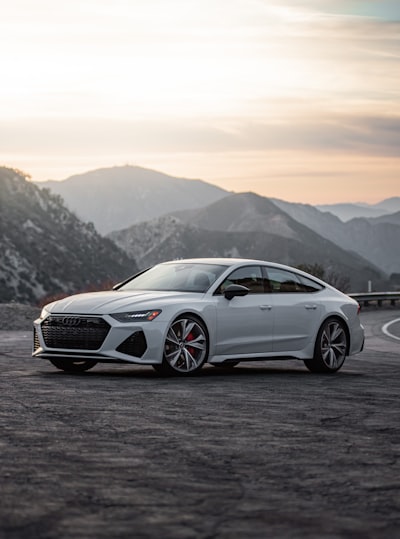
Premium Sedan Rental
Lexus ES, Toyota Camry, Honda Accord for comfortable expressway driving between Japan’s major cities.
One-Way Rental
Collect in Tokyo, return in Osaka or Kyoto. Available across all major Japanese cities and airports.
English GPS Navigation
Japanese addresses in English, temple names, expressway guidance and live traffic routing — essential for visitors.
Comprehensive Insurance
CDW with Non-Operation Charge (NOC) cover included. Strongly recommended for Japan’s narrow road network.

Child Safety Seats
Japanese-standard child seats and boosters compliant with Japan’s strict child restraint regulations. Book in advance.

Instant Online Booking
Confirm in 2 minutes with instant email confirmation in English and Japanese (日本語). Full booking reference provided.

Hotel Delivery
Free vehicle delivery to major Tokyo, Osaka and Kyoto hotels. Contactless key handover with Japanese-style meticulous handover.

24/7 Roadside Assistance
Japan Automobile Federation (JAF) network partnership. Free towing on all expressways and rural routes nationwide.
Free Cancellation
Cancel or modify up to 48 hours before collection at no charge. Simple online amendments in English available.

Snow Tyre Equipped
Winter-tyred vehicles for Hokkaido, Tohoku and mountain destinations. Mandatory November–April in snow regions.
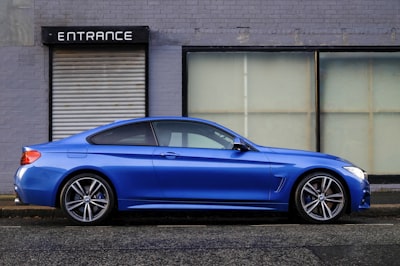
Unlimited Mileage Plans
Drive the Golden Route Tokyo–Kyoto–Osaka or the full Hokkaido circuit without counting kilometres.
Left-Hand Driving, ETC Tolls & Kei Cars
Japan drives on the LEFT with the steering wheel on the RIGHT — same as UK, Australia and New Zealand. American, European and mainland Asian visitors must consciously adjust, particularly at roundabouts and uncontrolled junctions. Japanese roads are immaculate and drivers disciplined — the transition is manageable with care.
Always request an ETC (Electronic Toll Collection) card-equipped vehicle. ETC reduces expressway tolls by 30% versus cash payment at booths, and allows seamless passage through dedicated fast lanes. Tokyo–Osaka (¥10,000–12,000 full length) becomes significantly more affordable with ETC discount rates.
IDP Required
Japan requires an International Driving Permit (IDP) for most foreign visitors — your home country licence alone is not valid. Obtain your IDP from your national automobile association before travelling. USA, UK, Canada, Australia and India all require a Geneva Convention 1949 IDP. Switzerland, Germany, France, Belgium and Taiwan require only an official Japanese translation.
Car Rentals Across All 8 Japanese Regions
From Hokkaido’s wilderness in the north to Okinawa’s tropical islands in the south — comprehensive car hire across Japan
| Region | Hub City | Key Rental Information & Highlights |
|---|---|---|
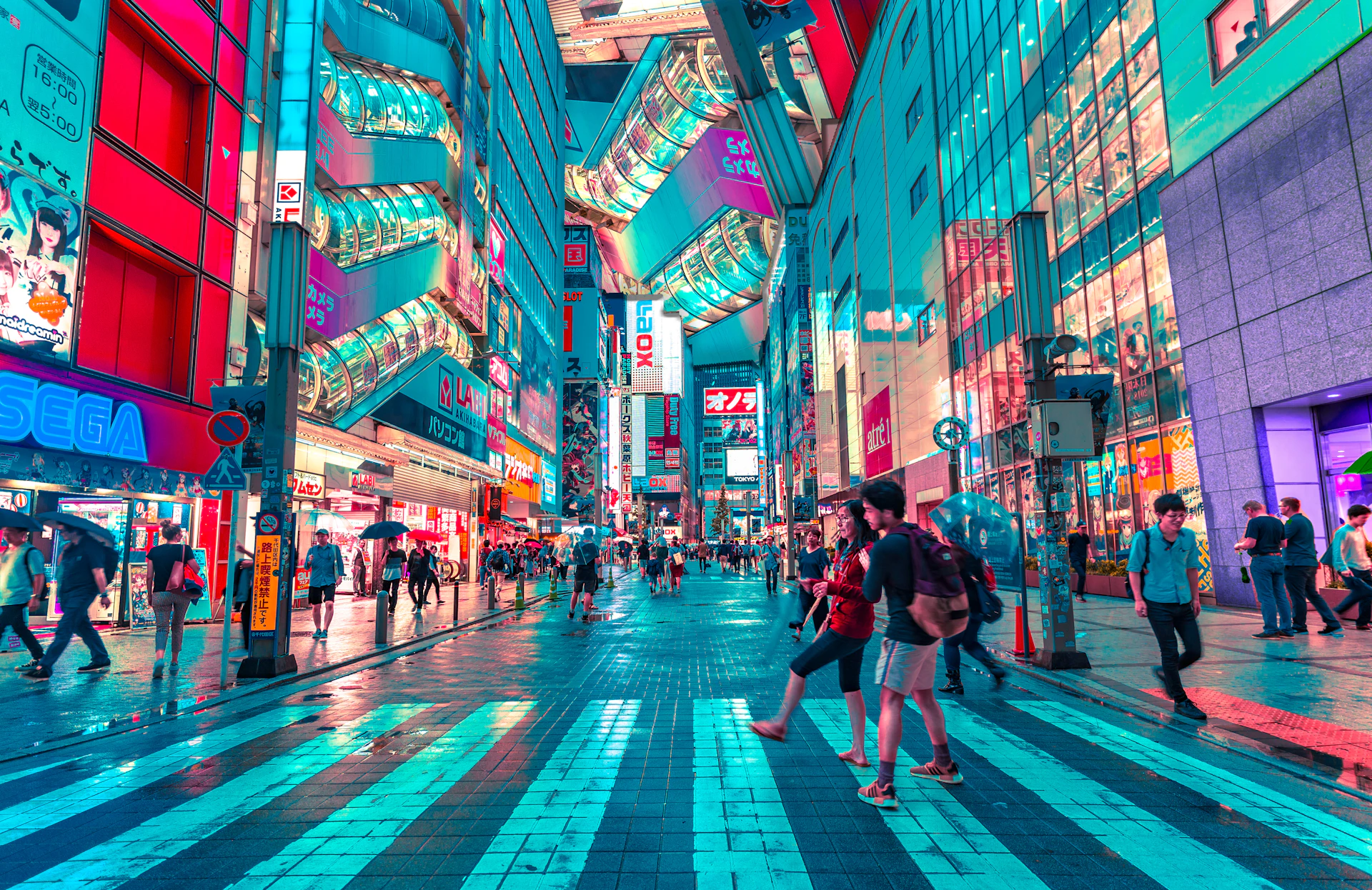
| Kanto (関東) | Tokyo | Japan’s capital region and the country’s most visited area. Tokyo Narita (60 km east, ¥3,000 toll) and Haneda (15 km south) airports are both major rental hubs — Narita has more selection, Haneda is more convenient. Tokyo’s own expressways are expensive (¥1,200 just to cross the city) and traffic-heavy — rental cars excel for escaping the metropolis: Mt. Fuji (130 km, 2 hrs), Hakone hot springs (100 km), Nikko UNESCO temples (140 km), Kamakura Great Buddha (50 km). Left-hand driving requires adjustment and English GPS is essential. Kei cars suit Tokyo’s narrow back streets; standard compacts for expressway day trips. |
| Kansai (関西) | Osaka | Western Japan’s cultural and culinary heart, anchored by Osaka, Kyoto, Nara and Kobe. Osaka Kansai International Airport is the regional hub. Kyoto’s extraordinary concentration of 2,000+ temples, UNESCO geisha districts and bamboo groves warrants 3–5 days minimum — a kei car navigates the narrow lanes of Higashiyama and Arashiyama where buses cannot reach. Nara’s sacred deer and Todai-ji Great Buddha are 40 km south. Kobe’s European-influenced Kitano district and Akashi Kaikyo Bridge lie 30 km west. Kansai’s expressway network is excellent. ETC card essential: Osaka–Kyoto toll is ¥1,000 but accumulates quickly. |
| Hokkaido (北海道) | Sapporo | Japan’s northernmost and most dramatic island — and the country’s finest driving destination. Sapporo New Chitose Airport has excellent rental availability. Unlike the rest of Japan, Hokkaido has wide roads, minimal traffic and distances comparable to a small European country. The Furano–Biei lavender fields bloom in July (the most visited summer route in Japan). Niseko’s world-class powder snow attracts Australian and international skiers. Shiretoko Peninsula (UNESCO wilderness, brown bears) and Cape Soya (Japan’s northernmost point) reward the adventurous driver. Winter tyres mandatory November–April. A 4WD SUV is strongly recommended for winter Hokkaido. |
| Kyushu (九州) | Fukuoka | Japan’s southern island, subtropical in character. Fukuoka Airport (7 km from the city centre) has good rental availability. Kyushu’s road network is excellent and traffic light outside cities. Essential driving: the active Mt. Aso volcanic caldera (car access to crater rim viewpoint, 170 km from Fukuoka), Beppu’s “Hells” hot spring geysers (240 km), Nagasaki’s atomic bomb legacy and Dejima Dutch trading post (180 km), Kagoshima overlooking Sakurajima active volcano (350 km). The scenic Aso Kuju National Park requires a car to access its best mountain roads. Ferry connections from Fukuoka to Busan, South Korea (3 hours). |
| Tohoku (東北) | Sendai | Northern Honshu — undiscovered, deeply traditional, extraordinarily beautiful. Sendai Airport and a growing rental network. The Sanriku Reconstruction Coastal Road (newly completed after the 2011 tsunami) runs 360 km along Japan’s most dramatic Pacific coastline. Matsushima Bay — pine-covered islands in an inland sea, one of Japan’s “three views” — lies 40 km northeast. Yamadera mountain temple complex (perched on cliffs, 70 km west) is a singular landscape. Cherry blossoms arrive late April — two weeks after Tokyo. Heavy snow (November–March) requires winter tyres for all mountain routes. |
| Chubu (中部) | Nagoya | Central Japan, home to the Japanese Alps (Japan’s highest mountain range outside Hokkaido). Nagoya Chubu Centrair Airport serves the region. Takayama — Japan’s best-preserved Edo-period merchant town, “Little Kyoto of the Hida” — lies 150 km north via the mountain expressway. Shirakawa-go (UNESCO thatched farmhouses in a deep valley, 185 km) is accessible only by car outside bus tour hours. The Tateyama Kurobe Alpine Route (seasonal road over Japan’s highest peaks) and the Norikura Skyline road (highest motorable road in Japan) are exclusively car-accessible. Toyota’s Aichi headquarters is 30 km from Nagoya airport. |
| Chugoku (中国) | Hiroshima | Western Honshu, anchored by Hiroshima’s Peace Memorial and Miyajima’s floating torii gate. Hiroshima Airport has adequate rental provision. Miyajima Island’s O-torii gate rising from the sea at high tide is one of Japan’s most photographed images — park at Hiroshima and take the ferry (20 minutes). Kurashiki’s preserved Edo-period warehouse district (70 km east) and Okayama’s Korakuen garden (ranked one of Japan’s three great gardens) anchor the region’s cultural itinerary. The Shimanami Kaido cycling and driving route connects 6 islands between Honshu and Shikoku across 70 km of spectacular bridges over the Inland Sea. |
| Okinawa (沙編) | Naha | Japan’s tropical island chain — a world apart from mainland Japan in culture, cuisine and landscape. Naha Airport is the gateway, with rental desks from all major operators. Okinawa Main Island is only 140 km long — easily circumnavigated in a day. The Ryukyu Kingdom’s distinctive red-roofed architecture, awamori spirit distilleries and champuru cuisine reflect Okinawa’s unique heritage. Cape Manzamo’s elephant-shaped limestone cliff, Ocean Expo Park’s Churaumi Aquarium (north, 90 km) and the southern war memorial sites are key stops. Outer islands (Ishigaki, Miyako) have their own rental fleets — accessed by ferry or short flight. Coral reefs, tropical fish and sea turtles reward those who dive beyond the main island. |
City Rental Guides for Japan’s Top Destinations
Local advice on airports, IDP requirements, left-hand driving adjustment and the best drives from each city
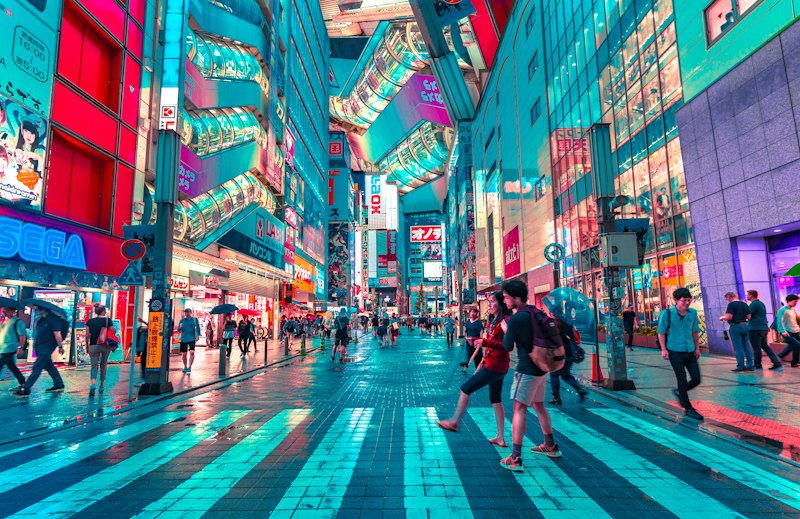
Tokyo — 東京
Kanto Region · World’s Largest Metropolis
Tokyo’s legendary rail network — 300 lines, 900 stations — makes a car unnecessary and frankly inadvisable within the 23 wards. Drive in Tokyo only if your specific itinerary requires it. Collect a rental from Narita Airport (60 km east, ¥3,000 toll) and head directly to your day-trip destination rather than entering the city. Haneda Airport (15 km south) is more convenient but has smaller rental selection. The real prize: driving out of Tokyo.
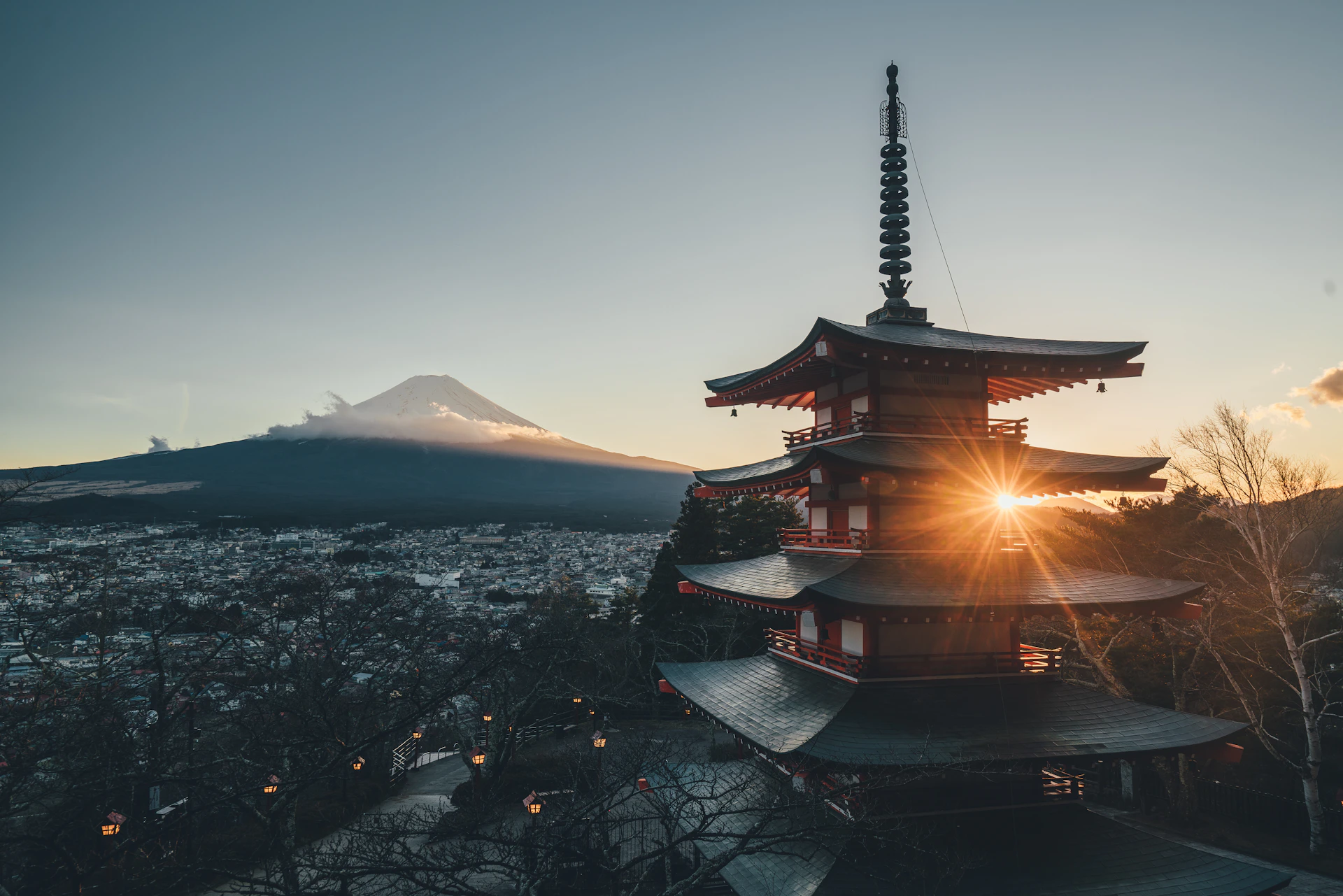
Mt. Fuji is the defining day trip — 130 km southwest via the Tomei Expressway (ETC). Depart before 7am, reach the fifth station by 9am before cloud covers the summit. Hakone’s open-air hot spring ryokans (100 km) pair perfectly with a Mt. Fuji approach. Nikko’s UNESCO Toshogu shrine complex (140 km north on the Nikko-Utsunomiya Expressway) deserves a full day. The Izu Peninsula (150 km southwest) delivers Japan’s most spectacular coastal drive along the Izu Skyline toll road, connecting oceanside onsen with Pacific ocean views.
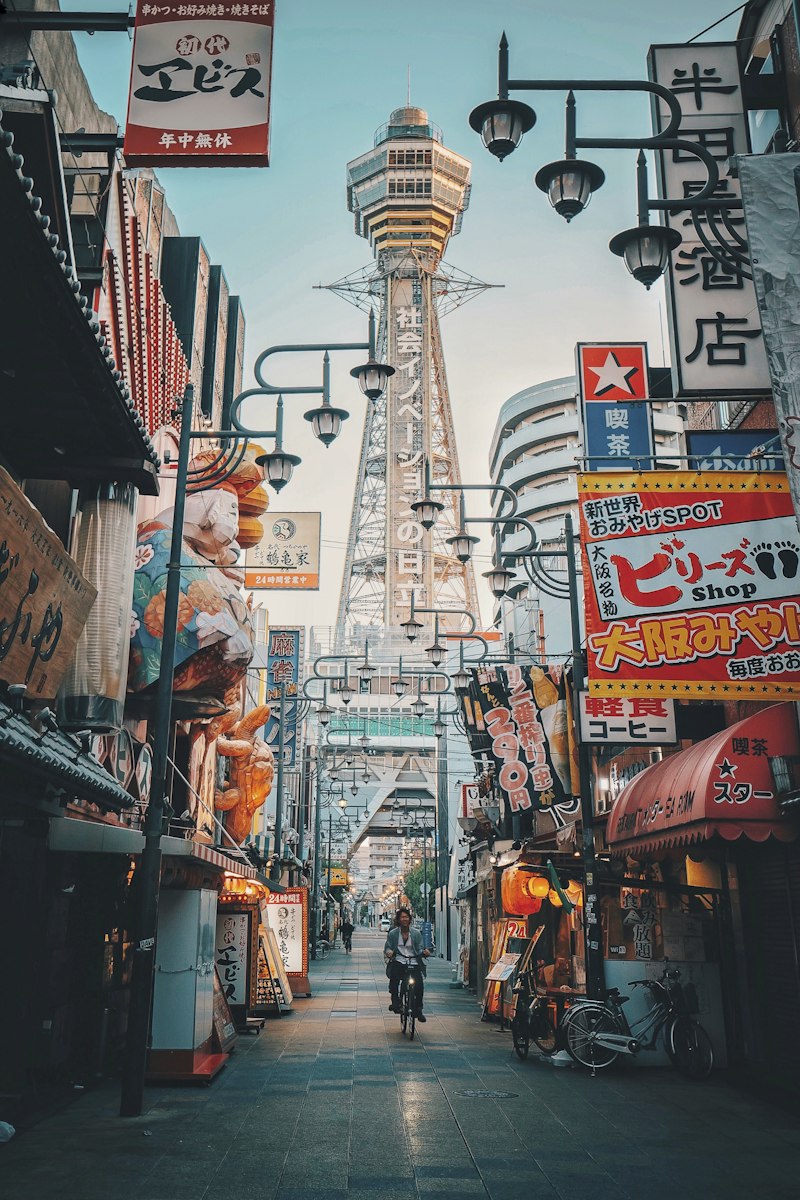
Osaka — 大阪
Kansai Region · Japan’s Kitchen · Kansai Gateway
Osaka functions as the Kansai region’s rental hub — and a magnificent base for exploring western Japan. Kansai International Airport (50 km southwest via the Hanshin Expressway) has the largest rental selection in the region; Itami Airport (15 km north) is more convenient but smaller. Collect from Kansai Airport and drive the Meishin Expressway northeast into Kyoto (50 km, 45 minutes with ETC). Osaka’s own Dotonbori neon district and Shinsekai neighbourhood reward an evening on foot after parking.
From Osaka, the entire Kansai cultural landscape is within 90 minutes: Kyoto’s Fushimi Inari thousand torii gates (55 km), Nara’s deer park and Todai-ji — Japan’s largest wooden building (45 km), Kobe’s Arima Onsen mountain hot spring (60 km via the Hanshinkosoku Expressway). The Yoshino mountain cherry blossom route (80 km south) is Japan’s most celebrated spring destination. Hiroshima is 340 km west — a comfortable one-way rental return point.
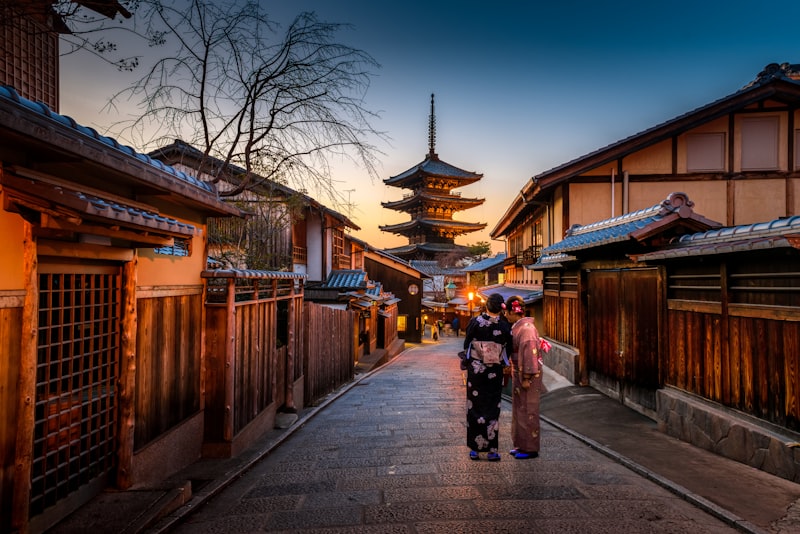
Kyoto — 京都
Kansai Region · Japan’s Ancient Capital · 2,000 Temples
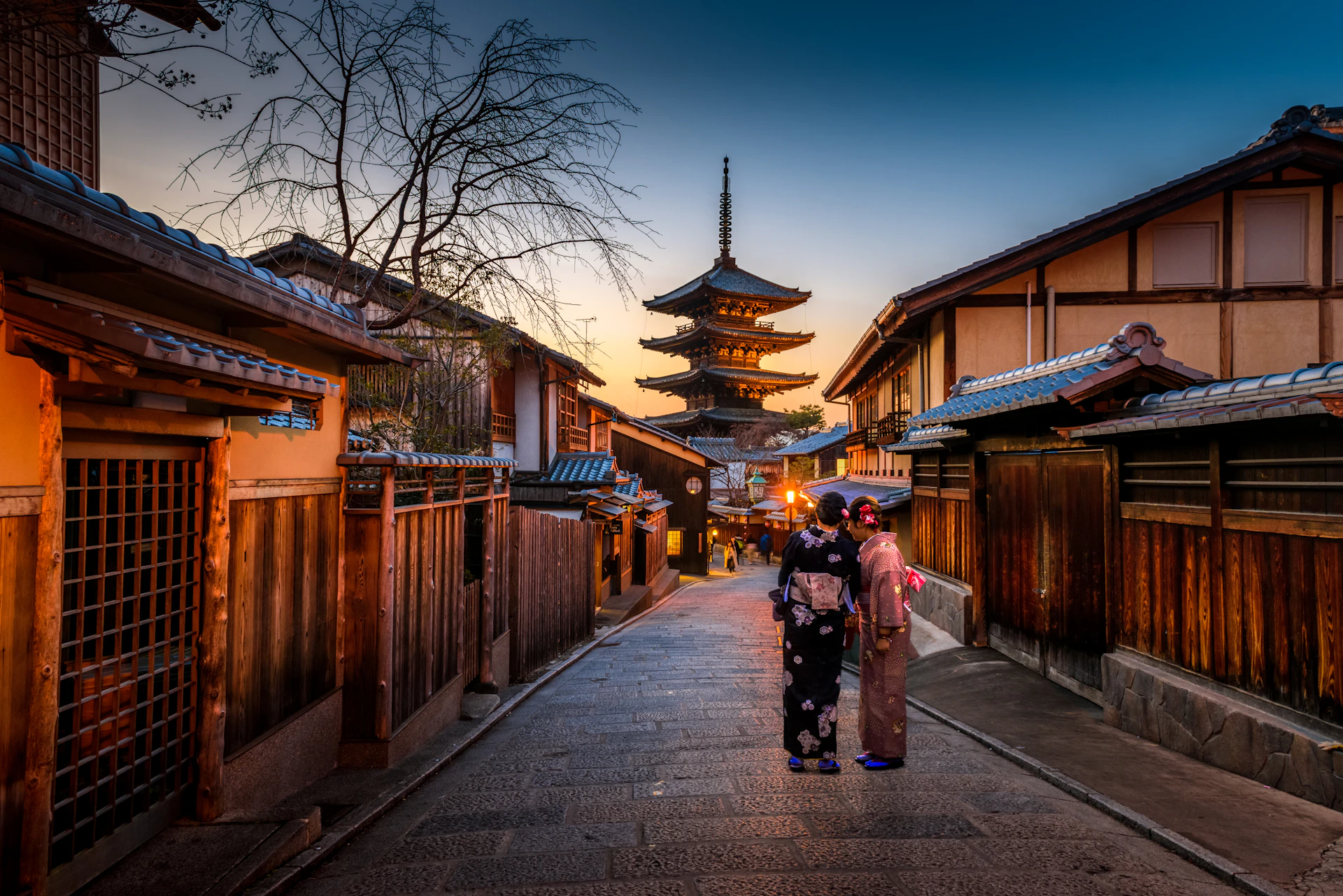
Kyoto is both Japan’s most visited city and one of its most challenging to drive in. The ancient grid of narrow lanes — particularly Higashiyama, Gion and Arashiyama — is genuinely sized for handcarts, not cars. A kei car is not merely recommended here; it is definitively the correct choice. Kyoto no longer has a major airport: collect from Osaka Kansai Airport (75 km, 60 minutes via Meishin Expressway) or Itami Airport (40 km, 40 minutes). Park at the edge of each temple district and walk in — Kyoto’s historic areas are compact and best experienced on foot.
A rental car unlocks Kyoto’s hidden surrounds. The mountain tea village of Uji (14 km south) is Japan’s finest matcha producing region. Ohara’s countryside temples (25 km north) are visited by a fraction of Kyoto’s crowds. The Kurama mountain onsen (28 km north) is a traditional hot spring village accessible by narrow forest road. Amanohashidate — Japan’s “Bridge to Heaven” sandbar (100 km northwest) — is among the country’s three most celebrated views and almost entirely missed by train-only visitors.

Hokkaido — 北海道
Hokkaido Region · Japan’s Wild North
Hokkaido is Japan’s definitive road trip island, and the only region of the country where a car is essentially mandatory for a meaningful visit. Sapporo New Chitose Airport has excellent rental availability from all major operators with economy rates from ¥6,000/day. Unlike the rest of Japan, Hokkaido has wide roads, manageable traffic and a landscape of genuine scale — Europe-sized distances across dairy farmland, volcanic mountains, wetland national parks and pristine Pacific coastline. The standard July circuit — Sapporo–Otaru–Furano lavender fields–Asahikawa (3–4 days) — is Japan’s most photogenic summer itinerary.
Winter Hokkaido is extraordinary. Niseko’s champagne powder snow (120 km from Sapporo) consistently ranks among the world’s finest ski destinations, attracting Australian, Chinese and European visitors who navigate via ETC-enabled rental SUVs on snow-covered mountain roads. The Sapporo Snow Festival in early February draws 2 million visitors — book rental vehicles months in advance. Summer: the lavender season (mid-July) at Farm Tomita in Furano (210 km from Sapporo) is Japan’s most photographed rural landscape. Winter tyres are mandatory from November through April on all Hokkaido routes.
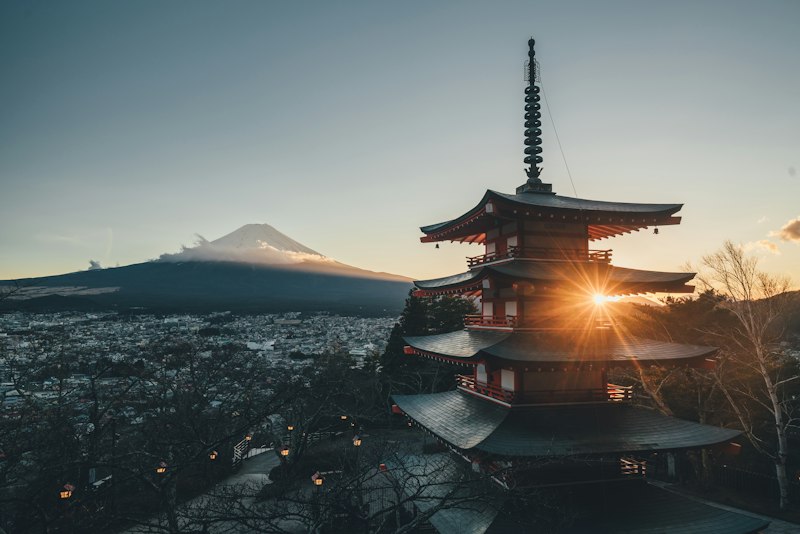
Okinawa — 沙編
Okinawa Region · Japan’s Tropical Islands
Okinawa is Japan at its most exotic — tropical, colourful and culturally distinct from the mainland. Naha Airport has rental desks from all major operators with economy rates from ¥5,500/day. The main island (Okinawa-honto) is only 140 km long and entirely circumpageable in a comfortable day. The Okinawa Expressway (Route 58 for free, Okinawa Expressway for ETC-equipped vehicles) runs the island’s spine. Shuri Castle (Ryukyu Kingdom UNESCO, 10 km from Naha) is the landmark you cannot miss.
Drive north to Cape Hedo (Japan’s northernmost tip, 90 km, 2 hours) via the coastal Route 58, stopping at Manzamo’s elephant-trunk limestone cliff and Ocean Expo Park’s Churaumi Aquarium (home to the world’s second-largest whale shark tank). The outer islands — Ishigaki (turquoise waters, manta rays), Miyako (Japan’s clearest water, consistently rated Asia’s best beach), Kerama Islands (world-class diving, sea turtles) — each have their own compact rental fleets accessible by short flight from Naha. Year-round tropical climate: average 23°C, typhoon season July–October.
Hiroshima — 広岛
Chugoku Region · City of Peace
Hiroshima’s Atomic Bomb Dome and Peace Memorial Museum are Japan’s most sobering and most important historical sites — two hours here changes perspectives permanently. Hiroshima Airport (50 km east) has rental desks from Toyota, Nippon and Times; most visitors using Shinkansen collect from city-centre rental offices. Parking near Peace Park is metered (¥200–300/hour) but widely available in surrounding streets.
Miyajima Island’s vermilion O-torii gate rising from Hiroshima Bay is Japan’s most iconic photograph — park at Hiroshima’s Miyajimaguchi pier (25 km via Route 2) and take the 10-minute ferry. The Shimanami Kaido toll road (70 km of bridges connecting six islands between Honshu and Shikoku) begins 80 km east — Japan’s finest bridge-and-island drive. Onomichi’s hillside temple walk (80 km east) and the preserved samurai town of Takehara (60 km east) reward a two-day Hiroshima circuit by car.

Nagano & the Japanese Alps
Chubu Region · Snow Monkeys · Alpine Routes
Nagano Prefecture hosts the Japanese Alps — the densest concentration of mountains above 3,000 metres outside the Himalayas — and some of Japan’s most extraordinary scenic driving. No major airport serves Nagano directly; collect from Tokyo (225 km via Chuo Expressway, 2.5 hours) or Nagoya (200 km via Chuo Expressway). The Jigokudani Monkey Park near Yamanouchi (50 km north of Nagano city) houses Japan’s iconic snow monkeys bathing in natural hot springs — a short drive and 20-minute walk from the car park.
The Tateyama Kurobe Alpine Route (seasonal May–November) is Japan’s most dramatic mountain journey: a combination of road, cable car, trolleybus and ropeway crossing the Alps with walls of snow 20 metres high on either side in spring. Drive to Shinano-Omachi (starting point, 60 km northwest of Nagano city) and travel through to Toyama on the Japan Sea coast. Kamikochi glacial valley — Japan’s most beautiful alpine destination — prohibits private vehicles in summer (park at Sawando and take shuttle bus, 50 km northwest). Hakuba ski resort (70 km northwest) hosted the 1998 Winter Olympics.
Fukuoka — 福崎
Kyushu Region · Japan’s Ramen City · Southern Gateway
Fukuoka is Japan’s youngest, most compact and arguably most liveable major city — and the natural gateway to Kyushu’s extraordinary volcanic landscape. Fukuoka Airport is Japan’s most city-centre airport (5 minutes by metro to Hakata Station), with rental desks from all major operators. Economy rates from ¥6,000/day. The city itself rewards an evening on foot among the yatai outdoor food stalls along the Naka River, eating Hakata tonkotsu ramen — the definitive Fukuoka experience.
Kyushu’s road network is excellent and expressway tolls are lower than Honshu. The active volcano Mt. Aso (170 km southeast on the Kyushu Expressway then National Route 57) is Japan’s largest volcanic caldera — drive to the rim viewpoint for one of Japan’s most surreal landscapes. Beppu (240 km southeast) is Japan’s most intense hot spring town — 2,800 onsen vents, boiling mud, steaming geysers, and the famous “Hells” circuit of dramatically coloured hot spring pools. Nagasaki (165 km west) combines its devastating atomic bomb history with one of Japan’s most attractive hilly port cities, shaped by centuries of Portuguese, Dutch and Chinese influence.

Sendai & Tohoku — 以南
Tohoku Region · Japan’s Undiscovered North
Tohoku — northern Honshu above Tokyo — is Japan’s most undervisited region and one of its most rewarding for the independently minded traveller. Sendai Airport (24 km south) has Toyota, Nissan and Times rental desks. Tohoku’s cultural highlights include Matsushima Bay (40 km northeast) — pine-covered islands scattered across a calm inland sea, listed among Japan’s traditional “three views” — and Yamadera (70 km west) where a 11th-century temple complex clings to a sheer mountain cliff face accessible only on foot from the car park below.
The Sanriku Reconstruction Coastal Road (opened 2020 after the 2011 tsunami) follows 360 km of Japan’s most dramatic Pacific coastline through rebuilt fishing communities, the Geibikei gorge, and the striking Jodogahama white pebble beach. Spring cherry blossoms arrive 2–3 weeks after Tokyo: Kakunodate samurai town’s 300-year-old weeping cherries (290 km north) and Hirosaki Castle park (340 km north, Japan’s most celebrated cherry blossom destination) are best seen mid-May. Winter tyres mandatory November–April for all inland mountain routes.
Car Rental Rates Across Japan
Average daily rates in Yen (¥) at major Japanese airports — inclusive of CDW insurance, English GPS and consumption tax. Expressway tolls and ETC card fee are additional.
| City / Airport | Daily Rate (¥) | Best Vehicle | Most Popular Route |
|---|---|---|---|
| Tokyo Narita (NRT) | ¥7,000 – ¥12,000 | Compact Hybrid / Sedan | Mt. Fuji · Hakone Onsen · Nikko Temples |
| Tokyo Haneda (HND) | ¥6,500 – ¥11,000 | Kei Car / Compact | Kamakura · Yokohama · Izu Peninsula |
| Osaka Kansai (KIX) | ¥6,000 – ¥10,000 | Kei Car / Compact | Kyoto Temples · Nara Deer · Kobe |
| Sapporo New Chitose (CTS) | ¥6,000 – ¥12,000 | SUV (Winter) / Compact (Summer) | Furano Lavender · Niseko Ski · Shiretoko |
| Naha Okinawa (OKA) | ¥5,500 – ¥9,000 | Economy / Kei Car | Shuri Castle · Churaumi Aquarium · Cape Hedo |
| Fukuoka (FUK) | ¥6,000 – ¥10,000 | Compact / Hybrid | Mt. Aso Volcano · Beppu Onsen · Nagasaki |
| Hiroshima (HIJ) | ¥6,000 – ¥9,500 | Compact / Sedan | Miyajima Island · Shimanami Kaido · Onomichi |
| Nagoya Chubu (NGO) | ¥6,500 – ¥11,000 | SUV / Compact | Takayama Edo Town · Shirakawa-go · Toyota HQ |
| Sendai (SDJ) | ¥6,000 – ¥9,000 | Compact / Sedan | Matsushima Bay · Yamadera Temple · Sanriku Coast |
| Kagoshima (KOJ) | ¥5,500 – ¥8,500 | Economy / Compact | Sakurajima Volcano · Yakushima Forest · Ibusuki Sand Bath |
Why Travellers Choose CarRental.net.in in Japan
English GPS Standard
All vehicles include English-language GPS with Japanese temple names, expressway guidance and live traffic — essential when road signs are in kanji.
ETC Toll Cards Available
Save 30% on expressway tolls with ETC card-equipped vehicles. Seamless fast-lane passage — no queuing at cash booths on Tokyo–Osaka intercity journeys.
24 × 7 English Support
Round-the-clock English helpline. JAF roadside assistance partnership provides breakdown cover across all regions including remote Hokkaido and Okinawa outer islands.
Kei Car Specialists
Japan’s unique 660cc kei cars from ¥5,000/day with cheaper toll rates. The right vehicle for Kyoto’s lanes, rural Tohoku and Okinawa outer islands.
Winter Tyre Service
Snow-tyred vehicles for Hokkaido, Tohoku and Alpine regions. Mandatory equipment for safe winter driving, included in seasonal pricing.
Flexible Booking
Confirm in 2 minutes with free cancellation up to 48 hours before collection. Instant English-language confirmation email.
Essential Driving Rules for Japan
Frequently Asked Questions About Renting in Japan
Yes — a domestic driving licence from most foreign countries is NOT valid in Japan without an International Driving Permit (IDP) based on the 1949 Geneva Convention. This applies to visitors from the USA, UK, Canada, Australia, India, most of Asia, and the majority of countries worldwide. Rental companies will refuse vehicle handover without a valid IDP, and Japanese police will issue fines of ¥30,000–50,000 for driving without one. Obtain your IDP from your national automobile association before departing for Japan: AAA in the USA, AA or RAC in the UK, NRMA or RACQ in Australia, CAA in Canada. Important exceptions: visitors from Germany, Switzerland, France, Belgium, Monaco, Taiwan and Slovenia do not need an IDP but require an official Japanese translation of their licence, which can be obtained from their country’s automobile association.
Most visitors adjust within 2–3 hours of careful driving. The key challenges: automatically turning into the wrong (right) lane when making turns, sitting on the right side of the car making width judgement for narrow roads harder, and roundabouts which require counterclockwise circulation (the opposite of European and American conventions). Specific tips: at every turn, consciously check “am I on the correct side?” for the first few hours; on narrow roads, check that you are positioned near the left kerb; collect your vehicle in a quiet area and drive around for 20–30 minutes before tackling a city or expressway. Japanese drivers are orderly, patient and courteous — the road environment is forgiving of cautious, careful foreign drivers. Highly experienced drivers from the UK, Australia and New Zealand will find no adjustment necessary.
ETC (Electronic Toll Collection, エレクトロニックトールコレクション) is Japan’s national electronic motorway toll system. An ETC card loaded into your rental vehicle allows you to pass through dedicated fast lanes at toll gates without stopping to pay cash. Benefits: 30% discount on all expressway tolls versus cash payment, no stopping or queuing at booths, and access to overnight discount rates (midnight–4am, additional 50% off). The ETC card rental typically costs ¥330/day from the rental company. For any journey involving expressways — which includes virtually all intercity travel between major Japanese cities — ETC is absolutely worth it. Tokyo–Osaka full expressway journey costs approximately ¥10,000–12,000 cash versus ¥7,000–8,400 with ETC. Always request an ETC card-equipped vehicle explicitly when booking.
Kei cars (“light cars”, 軽自動車) are uniquely Japanese — ultra-compact 660cc vehicles with dimensions (3.4m long, 1.48m wide) designed specifically for Japan’s narrowest roads. Choose a kei car if: you are travelling solo or as a couple with minimal luggage, your itinerary includes narrow historic city streets (Kyoto’s Higashiyama lanes, rural Tohoku), you are primarily budget touring with minimal expressway driving, or you are going to Okinawa where the roads are genuinely kei-car-sized. Choose a standard compact hybrid (Toyota Aqua, Nissan Note, Honda Fit — ¥7,000–9,000/day) if: you are travelling with family or luggage, your itinerary includes significant expressway distances (the 660cc engine is comfortable only up to 90–100 km/h), or you are driving Hokkaido or mountain regions where a slightly larger vehicle provides better stability. Hybrid compacts deliver exceptional fuel economy (22–30 km/litre) and are Japan’s most practical all-round rental choice.
Japanese expressway tolls are among the world’s most expensive. Major intercity routes: Tokyo–Osaka (¥10,000–12,000 cash, ¥7,000–8,400 with ETC), Tokyo–Kyoto (¥8,000–10,000 cash), Tokyo–Nagoya (¥5,500–7,000 cash), Osaka–Hiroshima (¥6,500–8,000 cash), Sapporo–Furano (¥2,800 cash). For trips involving expressways, budget toll costs as a significant additional expense alongside fuel (¥160–180/litre for regular gasoline). ETC Weekend & Holiday Discount reduces tolls by 30% on non-peak weekend and holiday travel. The NEXCO group operates Japan’s major expressway network; their official website has English toll calculators. On intercity routes, the Shinkansen bullet train is often cheaper overall when fuel and toll costs are totalled — renting locally (e.g. from Kyoto for a Kansai circuit) and using Shinkansen for the main intercity legs is often the most cost-effective strategy.
Yes — one-way rentals between Japanese cities are available with all major operators (Toyota Rent-a-Car, Nissan, Times, Nippon, Orix). One-way fees (出返し手数料) typically range from ¥5,000–15,000 depending on distance and operator. Popular one-way routes: Tokyo to Kyoto/Osaka (¥8,000–12,000 one-way fee), Osaka to Hiroshima (¥5,000–8,000), Tokyo to Nagoya (¥5,000–8,000). Island-to-mainland one-ways (Okinawa to Kyushu, Hokkaido to Honshu) are not possible — island rental fleets are entirely separate. The Golden Route (Tokyo→Mt. Fuji→Kyoto→Osaka) is the most popular one-way rental in Japan, driving the Tomei and Meishin Expressways through Japan’s cultural heartland. Book one-way rentals at least 3–4 weeks ahead; peak season (Golden Week late April–early May, Obon mid-August, New Year) requires booking months in advance.
Snow tyres are legally mandatory and physically essential in Hokkaido, Tohoku, and mountain areas (Nagano, Gifu, Yamagata, Akita, Niigata) from approximately November through April. Rental companies in these regions automatically equip vehicles with snow (studless) tyres during winter months — typically included in the seasonal rental rate or charged as a small supplement (¥500–1,000/day). In the Tokyo/Osaka/Kyoto corridor and most of Kyushu, snow tyres are generally unnecessary as snowfall is rare and brief. Okinawa never requires winter tyres (year-round tropical climate). If you are renting in Hokkaido between November and April, always confirm snow tyre provision when booking and refuse any vehicle without them. Chains are required for some specific mountain passes after heavy snowfall even with snow tyres — these are provided at the rental desk in affected areas.
The best overall periods for car travel in Japan are late autumn (mid-October to mid-November: koyo red and gold maple leaf season, Japan’s most breathtaking natural spectacle, particularly in Nikko, Kyoto, Tohoku and Hokkaido) and spring (late March to early May: sakura cherry blossom season, moving north from Kyushu to Hokkaido over 6 weeks). Golden Week (late April to early May) is a major Japanese national holiday period: rental demand is extreme, prices spike and expressways congest badly — book months in advance or avoid entirely. Summer (June–August) is the season for Hokkaido lavender (July) and Okinawa diving, but also typhoon season (Okinawa, Kyushu, August–October). Winter is excellent for Hokkaido ski rentals (January–March) and uniquely quiet driving in the rest of Japan. Obon holiday (mid-August) sees extreme expressway congestion nationwide. Book 4–8 weeks ahead outside Golden Week/Obon; 3–4 months ahead for those peak periods.
Book 4–8 weeks in advance for best pricing. Compare via Japanese booking platforms Tabirai, RentalCars Japan and the direct websites of Toyota Rent-a-Car and Times Car Rental, which often beat aggregator prices. Kei cars (¥5,000–6,000/day) are the cheapest vehicle category and genuinely useful throughout Japan. Regional airports (Hokkaido New Chitose, Okinawa Naha, Fukuoka) consistently offer lower rates than Tokyo or Osaka. Some companies offer unlimited-distance flat-rate expressway passes for specific regions — Hokkaido and Kyushu “expressway passes” for foreign visitors cap tolls at ¥2,000–3,000/day, representing excellent value for multi-day regional touring. Request ETC cards to save 30% on non-capped toll journeys. Refuel before returning the vehicle — rental company refuelling charges are ¥60–80/litre premium over pump price. Off-peak periods (February, June rainy season, November–early December) deliver the most competitive base rates.
Contact Our Japan Team
English-speaking team available 24 × 7 for bookings, IDP advice, ETC guidance and any Japan rental query