
Car Rentals Across Germany
Drive a BMW on the unlimited Autobahn, tour Bavaria's fairytale castles, or explore Berlin's historic streets — no toll roads, free GPS, instant booking.
Europe's Driving Nation —
Engineering Meets Freedom
Germany is the birthplace of the automobile. Benz, Daimler, Porsche, BMW — the names that define motoring excellence all come from this country, and nowhere in the world is driving taken more seriously. The legendary Autobahn connects every major city with immaculate precision-engineered motorways that, on unrestricted sections, allow you to experience a BMW 5-Series or Mercedes E-Class at speeds that would be unthinkable anywhere else in Europe. This is the country's greatest tourism advantage — and the primary reason discerning travellers rent here.
Germany's 16 federal states each deliver distinct character. Bavaria in the south combines Alpine skiing at Garmisch-Partenkirchen with fairytale Neuschwanstein Castle and Munich's world-famous Oktoberfest. Berlin in the northeast is reunified, raw, and culturally electric. The Rhine Valley between Cologne and Rüdesheim is a UNESCO landscape of medieval castle ruins above vine-covered hillsides. Baden-Württemberg houses both the Black Forest's dense pine valleys and Stuttgart's extraordinary automotive museums — free admission included with a vehicle rental at nearby Sixt or Hertz desks.
Transparent All-In Pricing
CDW, GPS, Umweltzone sticker and roadside assist itemised upfront. Zero surprise charges at collection or return.
24 × 7 ADAC Support
English and German helpline backed by Germany's ADAC roadside partnership — Europe's largest motoring organisation.
Autobahn-Ready Fleet
BMW, Mercedes, Audi and VW vehicles maintained to factory standards for high-speed motorway cruising.
Free GPS — All of Germany
German-map GPS with construction zone alerts and speed limit reminders for variable-limit Autobahn sections.
All Major Airports
Collection desks at Frankfurt, Munich, Berlin BER, Hamburg, Düsseldorf, Stuttgart, Cologne and Dresden.
EV Fleet Available
VW ID.4, BMW iX, Tesla Model 3 and Mercedes EQC available at major city airports. Germany's charging network is expanding rapidly.
Autobahn vs City Driving — What to Expect
| Factor | Autobahn Driving | City Driving (Berlin · Munich · Frankfurt) |
|---|---|---|
| Speed Limit | ✔ NO LIMIT on ~70% of sections (advisory 130 km/h) | 50 km/h urban, 30 km/h residential zones — strictly enforced |
| Overtaking | ✔ Left lane ONLY — keep right (Rechtsfahrgebot) | Standard lane discipline — more relaxed |
| Best Vehicle | ✔ BMW, Mercedes, Audi — premium cruisers | Compact VW, Opel — easier to park |
| Toll Cost | ✔ Completely FREE for cars | ✔ No tolls anywhere in Germany |
| Umweltzone | Not applicable on Autobahn | ⚠ Green sticker mandatory (included in rental) |
| Parking | Free Raststätten rest stops every 40–60 km | €2–4/hour Parkhaus — use Park & Ride on city edges |
| Fuel Use | Higher above 150 km/h — premium diesel efficient | Lower at 50 km/h — economy hatchback ideal |
| Safety Rule | Never tailgate, check mirrors constantly for 200+ km/h vehicles | Tram right-of-way at all times — always stop for trams |
27 Rental Solutions for Every German Journey
Economy compacts for city centre errands, premium BMW cruisers for Autobahn adventures, electric vehicles for zero-emission touring — whatever Germany demands, we deliver
Economy Car Rental
VW Polo, Opel Corsa, Ford Fiesta from €35/day — ideal for city centre driving and short Autobahn trips.
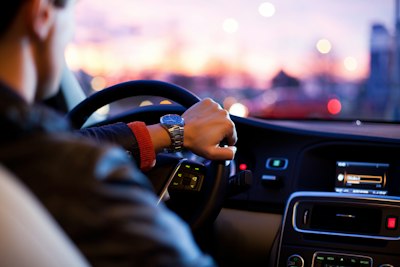
Chauffeur-Driven Service
Professional drivers across Berlin, Munich, Frankfurt and Hamburg for executive meetings and airport transfers.
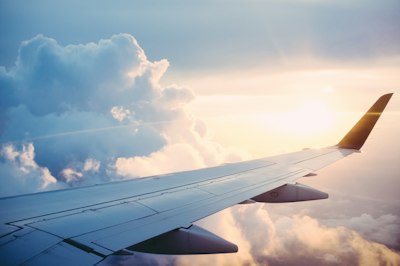
Airport Transfers
Meet-and-greet at Frankfurt, Munich, Berlin BER, Hamburg and Düsseldorf airports — 24/7 coverage.
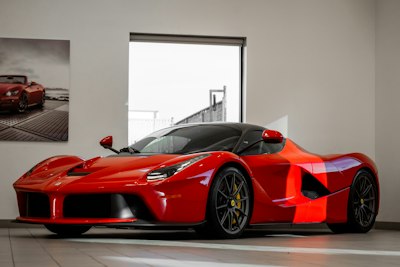
BMW & Mercedes Rental
BMW 5-Series, Mercedes E-Class, Audi A6 — the definitive Autobahn cruisers. Available from €90/day.
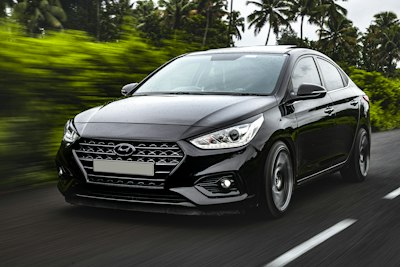
SUV & Estate Rental
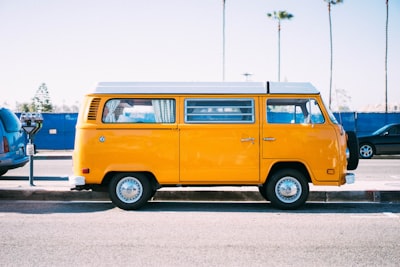
VW Tiguan, BMW X3 for Black Forest touring, Alpine approaches and Bavarian countryside exploration.
Corporate Car Rental
Monthly fleet contracts for businesses in Frankfurt's Bankenviertel, Munich's Maxvorstadt and Berlin's Mitte.
Porsche & Sports Cars
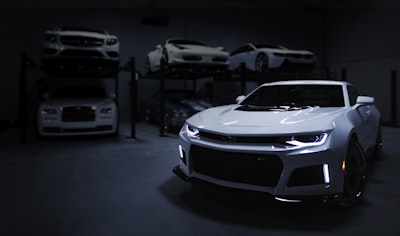
Porsche 911, Porsche Macan, AMG models for experiencing German engineering performance on unlimited Autobahn.
Minibus & Van Rental
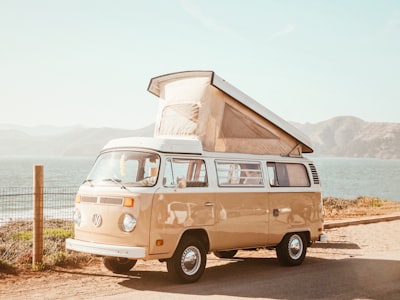
Mercedes Sprinter, VW Transporter — group tours to Oktoberfest, Christmas markets and Rhine cruises.
Wedding Car Rental
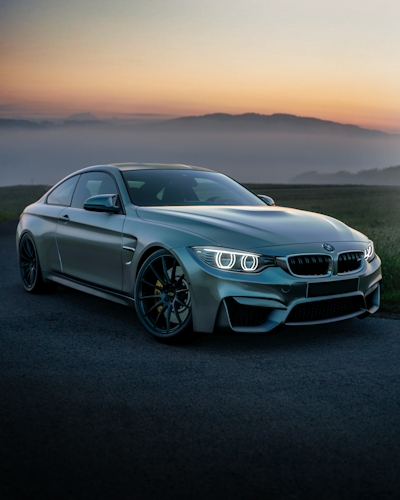
Classic Mercedes 300 SL, Vintage Porsche and Rolls-Royce for German castle and vineyard wedding celebrations.
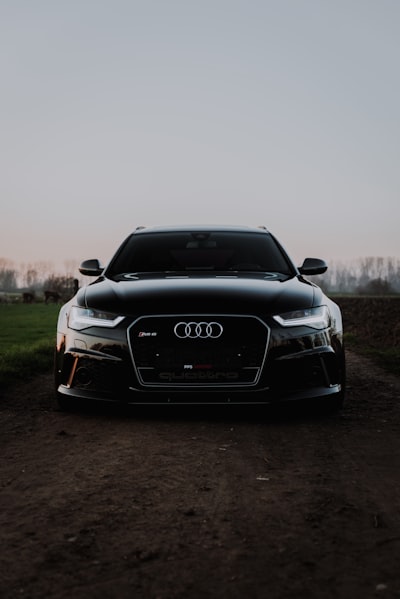
Long-Term Rental
Monthly contracts with unlimited mileage. Ideal for expats, students and international employees across Germany.
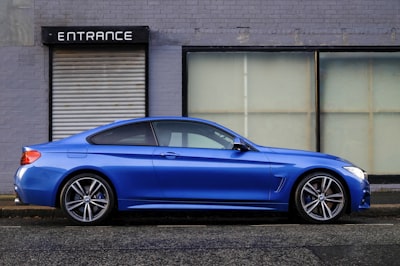
Convertible Rental
BMW 4 Series Cabriolet and Mercedes SLC for Rhine Valley drives and Bavarian summer touring.
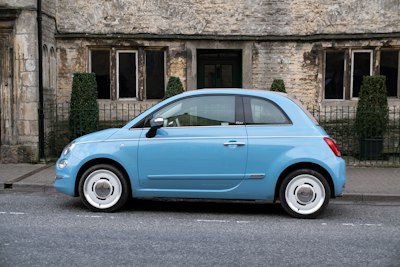
Electric & Hybrid Cars
VW ID.4, BMW iX3, Tesla Model 3. Germany's charging network now covers all Autobahn corridors with fast chargers.
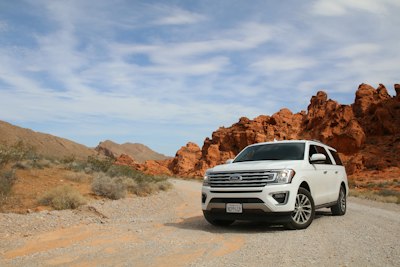
Road Trip Packages
Romantic Road (Würzburg–Füssen), Rhine Castle Route, Black Forest Hochstrasse — curated packages, unlimited km.
Budget Compact Rental
Opel Corsa, Skoda Fabia from €33/day — compact dimensions ideal for tight city centre parking.
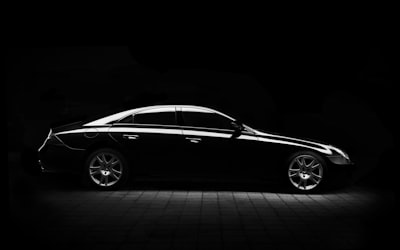
Hourly Car Rental
Rent by the hour in Berlin, Munich and Frankfurt — minimum 4 hours for day trips and city errands.
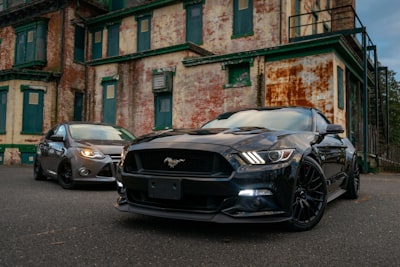
Estate Car Rental
VW Passat Estate, Skoda Octavia Estate — generous luggage capacity for ski equipment and family touring.
Cargo Van Rental
Mercedes Vito, Ford Transit for business deliveries and trade fair logistics across German cities.
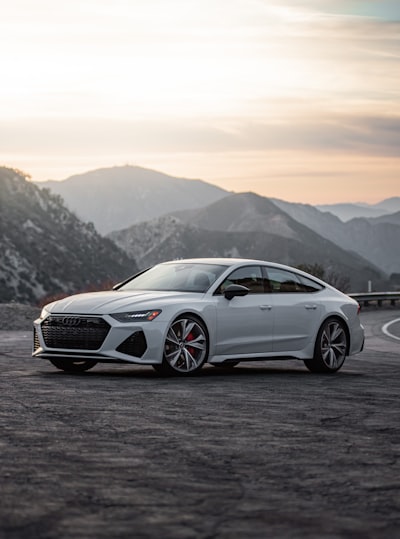
Premium Sedan Rental
Mercedes C-Class, BMW 3-Series, Audi A4 — the definitive business travel package with Autobahn capability.
One-Way Rental
Collect in Berlin, return in Munich or Frankfurt. Available across all major German cities and airports.
Free GPS Navigation
Germany-wide GPS with construction zone alerts, speed camera warnings and variable Autobahn limit reminders.
Comprehensive Insurance
CDW included. Super CDW reduces excess to zero. High-speed Autobahn coverage confirmed in all policies.
Child Safety Seats
EU-approved baby seats and boosters compliant with German child restraint law — book in advance.

Instant Online Booking
Confirm in under 2 minutes. Instant confirmation in English and German (Deutsch) with full booking reference.

Hotel Delivery
Free vehicle delivery to Berlin, Munich and Frankfurt city-centre hotels. Contactless key handover available.

24/7 ADAC Roadside Assist
Germany's ADAC network provides nationwide breakdown cover — free towing on all routes including Autobahn.
Free Cancellation
Cancel or modify your booking up to 48 hours before collection at no charge. Simple online amendments.

Unlimited Mileage Plans
Drive the full length of Germany — Hamburg to Garmisch (900 km) — without counting kilometres.
The Autobahn Experience —
No Limits, No Tolls
Around 70% of Germany's 13,000 km Autobahn network has no posted speed limit. The white diagonal-slash sign means unrestricted — and the advisory speed of 130 km/h is merely a suggestion, not a rule.
Germany's Autobahn is completely free for private cars — unlike France (€70–85 Paris–Nice), Italy, or Austria. No toll booths, no vignettes, no electronic tags. Germany funds its roads through fuel taxes.
Critical Autobahn Rules
Overtake left only — passing on the right (rechts überholen) is strictly illegal and enforced. Always keep right except when actively overtaking. Check mirrors constantly — vehicles may approach at 220+ km/h in the left lane.
Car Rentals Across All 16 Federal States
From Bavaria's Alps to Hamburg's harbour, from Berlin's urban sprawl to Baden-Württemberg's Black Forest — reliable car hire in every Bundesland
| Federal State (Bundesland) | Capital | Key Rental Information & Highlights |
|---|---|---|
| Bavaria (Bayern) | Munich | Germany's tourism powerhouse and the country's largest state by area. Munich Franz Josef Strauss Airport is the nation's second busiest rental hub. Drive south on the A95 to Garmisch-Partenkirchen and the Zugspitze (Germany's highest peak, 90 km) or west to Neuschwanstein Castle (120 km on the Romantic Road). Nuremberg's Christmas market, Regensburg's Roman heritage, and the Berchtesgaden Eagle's Nest round out a state of extraordinary variety. BMW's Munich headquarters and museum offer free tours — an essential stop for any motoring enthusiast. |
| North Rhine-Westphalia | Düsseldorf | Germany's most populous state — 18 million people in the Rhine-Ruhr metropolitan area. Cologne's twin-spired Dom Cathedral (Germany's most visited landmark) stands 30 km south of Düsseldorf. The Rhine Gorge between Koblenz and Bingen — a UNESCO landscape of medieval castle ruins and Riesling vineyards — lies 90 km south. Düsseldorf Airport provides the main rental hub; Cologne Bonn Airport offers an alternative. Drive west into Belgium via the Eifel National Park or east to the Sauerland hills for contrast to the industrial flatlands. |
| Baden-Württemberg | Stuttgart | The automotive heartland of Germany — both Mercedes-Benz and Porsche were founded here. Stuttgart Airport has rental desks directly opposite the Mercedes-Benz Museum and a 20-minute drive from the Porsche Museum (both free). The Black Forest (Schwarzwald) begins 60 km west of Stuttgart, with the Schwarzwald-Hochstrasse scenic route offering dramatic ridge-top driving through dense pine forest. Heidelberg's romantic castle ruins and Freiburg's medieval minster anchor the tourist circuit. Lake Constance (Bodensee) at the Swiss border delivers a Mediterranean atmosphere in the German south. |
| Lower Saxony (Niedersachsen) | Hanover | Germany's second-largest state by area connects the North Sea coast with the Harz Mountains, Germany's northernmost upland range. Hanover Airport provides solid rental availability, though the city is primarily a trade fair destination (CeBIT, Hanover Messe) visited by business travellers. The VW Autostadt in Wolfsburg — a theme park dedicated to automotive brand history — is a genuine attraction worth the 90 km drive northeast. The Lüneburg Heath flowers purple in August; the medieval towns of Goslar and Quedlinburg (both UNESCO) anchor the southern Harz area. |
| Hesse (Hessen) | Wiesbaden | Germany's financial hub, dominated by Frankfurt am Main — home to the European Central Bank, Deutsche Bank and the country's busiest airport. Frankfurt Airport (FRA) is Germany's number-one car rental hub by volume with all major operators represented. The city's strategic central location makes it the starting point for most German road trips: Rhine Valley (70 km west), Heidelberg (90 km south), Würzburg and the Romantic Road (120 km east), and Nuremberg (230 km east). The Taunus hills northwest of Frankfurt offer a quick escape from the financial city. |
| Saxony (Sachsen) | Dresden | East Germany's cultural crown jewel, rebuilt from wartime destruction into one of Europe's most beautiful baroque cities. Dresden Airport provides solid rental availability, typically 10–15% cheaper than western German airports. Saxon Switzerland National Park (30 km southeast) offers dramatic sandstone formations and the iconic Bastei Bridge viewpoint — among Germany's most photographed landscapes. Leipzig (115 km west) is Bach's city and home to Germany's oldest trade fair institution. The Erzgebirge mountains along the Czech border deliver skiing in winter and hiking in summer. Prague is an easy 150 km day trip on toll-free Czech motorways. |
| Rhineland-Palatinate | Mainz | Germany's most scenic driving state — the Middle Rhine Valley between Koblenz and Rüdesheim is a UNESCO World Heritage Site of extraordinary beauty. The B9/L214 road along the west bank passes beneath 40 castle ruins in 65 km. Moselle Valley vineyards (Bernkastel-Kues to Cochem) follow the river's tight bends for 200 km of Riesling and Pinot Noir discovery. Trier, Germany's oldest city with four UNESCO Roman monuments, lies at the state's southern end. The Nürburgring racing circuit in the Eifel mountains offers track days for those who want unrestricted speed in a controlled environment. |
| Hamburg | Hamburg | Germany's second-largest city and the country's busiest commercial port. Hamburg Airport sits just 8 km from the city centre — a rarity in Germany. The Elbphilharmonie concert hall and the UNESCO-listed Speicherstadt red-brick warehouse district define the modern city. Lübeck's Holsten Gate and Hanseatic old town lie 70 km east. The Baltic coast resort island of Fehmarn connects via bridge 150 km northeast. The A1 Autobahn north leads to Denmark (Copenhagen 330 km) making Hamburg the gateway city for Scandinavian road trips. |
| Schleswig-Holstein | Kiel | Germany's northernmost state between the North Sea and Baltic Sea. Lübeck, with its seven-towered skyline and marzipan heritage, is a worthy 70 km detour from Hamburg. The Sylt island beaches — accessible via the Hindenburgdamm causeway by train or car transporter — deliver fashionable dune resort culture. The Viking Museum in Schleswig reveals 1,000 years of Norse history. The Kiel Canal, the world's busiest artificial waterway, can be crossed at multiple points on free car ferries. Danish border culture bleeds into the state's northern towns. |
| Brandenburg | Potsdam | Entirely surrounds Berlin, making it the natural extension of the capital's car rental market. Potsdam's Sanssouci Palace complex — Prussia's answer to Versailles, built by Frederick the Great — is 40 km from Berlin BER Airport and the state's headline attraction. The Spreewald biosphere reserve (100 km southeast) delivers a unique landscape of 1,300 km of navigable waterways through riverside forest. Brandenburg an der Havel's medieval cathedral and the Elbe-Elster lake district add variety. Most Brandenburg visitors collect their car in Berlin and use the state as a day-trip destination. |
| Thuringia (Thüringen) | Erfurt | Germany's forested green heart, compact enough to explore thoroughly in 3–4 days. Erfurt's largely intact medieval city centre was spared wartime bombing. Weimar — where Goethe and Schiller lived and worked, and where Germany's first democratic constitution was signed in 1919 — lies 25 km east. Wartburg Castle in Eisenach (80 km west) is where Martin Luther translated the Bible into German; it predates the Reformation by centuries. The Thuringian Forest hiking trail (Rennsteig) follows the ridge of a landscape that defined German Romanticism. Erfurt-Weimar Airport has modest but useful rental availability. |
| Saxony-Anhalt | Magdeburg | East Germany's least-visited but historically significant state, spanning the Harz Mountains and the Elbe River valley. Quedlinburg's UNESCO-listed medieval collegiate church sits on a rocky plateau above a perfectly preserved half-timbered town — among Germany's most authentic historic townscapes. Lutherstadt Wittenberg (70 km from Berlin) is where Martin Luther nailed his 95 Theses in 1517, launching the Protestant Reformation. The Bauhaus Foundation in Dessau houses the original 1925 school building. Access via Leipzig/Halle Airport (connects the south of the state) or Berlin BER for the north. |
| Mecklenburg-Vorpommern | Schwerin | Northeast Germany's beach and lake destination — 2,000 lakes, Germany's largest island (Rügen), and the Baltic coast's cleanest waters. Rostock-Laage Airport provides rental access. Rügen Island's chalk cliffs (Jasmund National Park, the white Königsstuhl) are Germany's most iconic coastal landscape. Usedom Island shares a border with Poland — you can drive from Germany to Poland through the dunes. Schwerin Castle, built on a lake island, resembles a fairy-tale illustration. The state is significantly less expensive and less crowded than comparable coastal destinations in western Germany. |
| Bremen | Bremen | Germany's smallest state (city-state) and one of Europe's most historic trading cities. Bremen Airport has useful rental availability. The UNESCO-listed Market Square, Roland statue and Town Hall represent 600 years of Hanseatic merchant power. The Böttcherstraße expressionist alley and Schnoor Quarter's medieval lanes reward slow walking exploration. Bremerhaven (60 km north) houses the German Emigration Center and the German Maritime Museum in a converted ship harbour. The state pairs easily with Hamburg (125 km north) and the Lower Saxony countryside on a northern Germany circuit. |
| Saarland | Saarbrücken | Germany's smallest non-city-state, wedged between France and Luxembourg. The UNESCO-listed Völklingen Ironworks is one of Europe's finest examples of industrial heritage — a complete 19th-century blast furnace complex frozen in time. Saarbrücken's Franco-German bilingual character reflects three centuries of border changes between France and Germany. Luxembourg City lies just 40 km west, making Saarland the natural base for a mini Grand Duchy day trip. Saarbrücken Airport is small; Luxembourg Airport (40 km) offers better rental choice and connections. |
| Berlin | Berlin (Capital) | Germany's reunified capital is the country's most internationally famous car rental destination. Berlin BER Airport (opened 2020 after years of delays) sits 25 km southeast of the city with desks from Sixt, Europcar, Hertz, Avis, Enterprise and Buchbinder. Within the city, the U-Bahn and S-Bahn systems make a car unnecessary for sightseeing — rent specifically for Brandenburg excursions (Potsdam 40 km) or long-distance Autobahn drives to Dresden (195 km), Hamburg (290 km) or Munich (585 km, 5.5 hours via A9 — Germany's longest Autobahn). Poland border lies 90 km east; no crossing formalities in the Schengen zone. |
City-by-City Rental Guides for Germany
Local expertise on where to collect, how to navigate, what to avoid, and the best drives from each city
Berlin
Capital City-State · Where History Meets Modernity
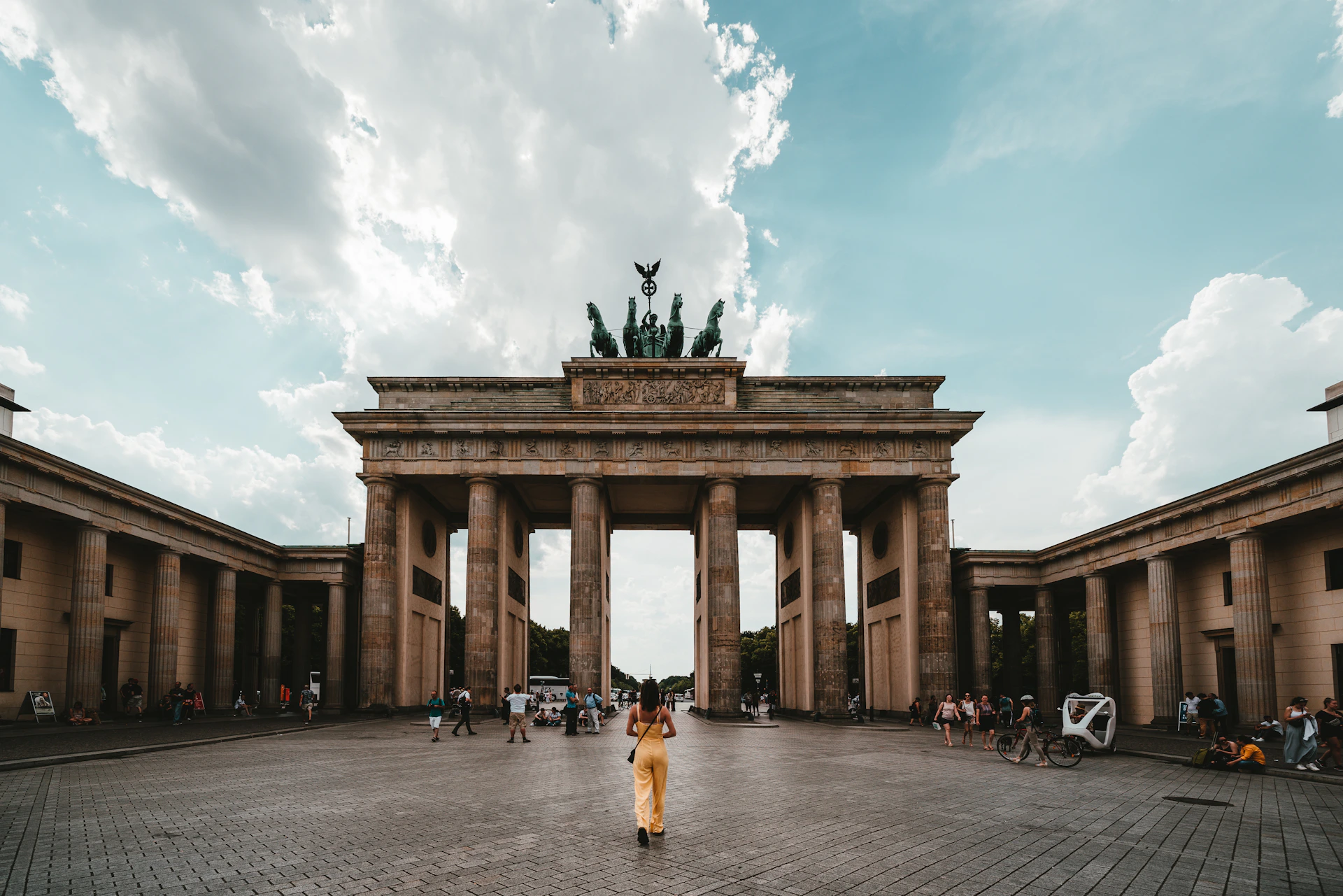
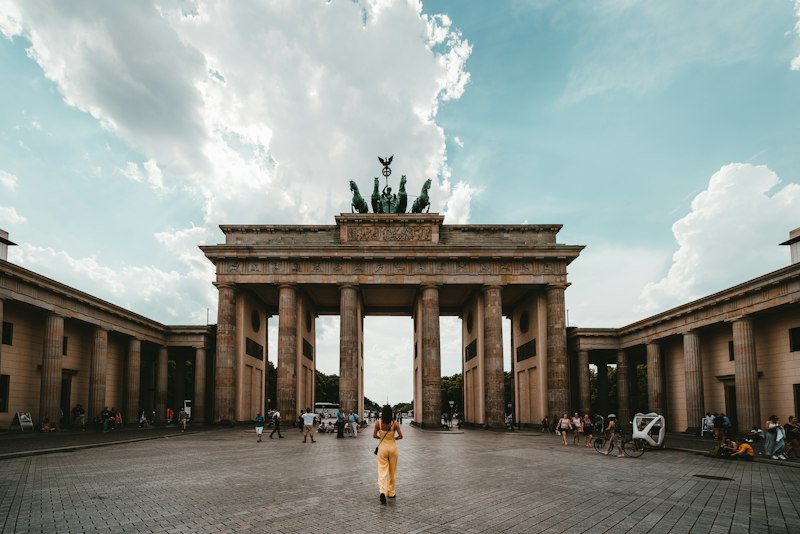
Germany's capital has two personalities. Inside the S-Bahn ring, Berlin is best explored on foot and by U-Bahn — the Brandenburg Gate, Reichstag, Museum Island, East Side Gallery Wall remnants and Checkpoint Charlie are compact and walkable. But a rental car unlocks everything beyond the ring: Potsdam's Sanssouci Palace complex (40 km on the A115) rewards a full day among Prussia's finest baroque gardens; the Spreewald canals (100 km southeast) deliver a landscape unlike anything else in central Europe.
Berlin BER Airport (25 km southeast, opened 2020) has desks from all major operators with economy rates from €40–50/day. The B96a Avus is Berlin's own historic motorsport circuit — now a public dual carriageway connecting the city to the A115 Autobahn. Park at BER or edge-of-city Park & Ride (€1–2/day) and use S-Bahn for city centre visits. Dresden is 195 km south (2 hours on the toll-free A13), Hamburg 290 km north (2.5 hours on the A24).
Munich
Bavaria · Alpine Gateway · BMW Capital
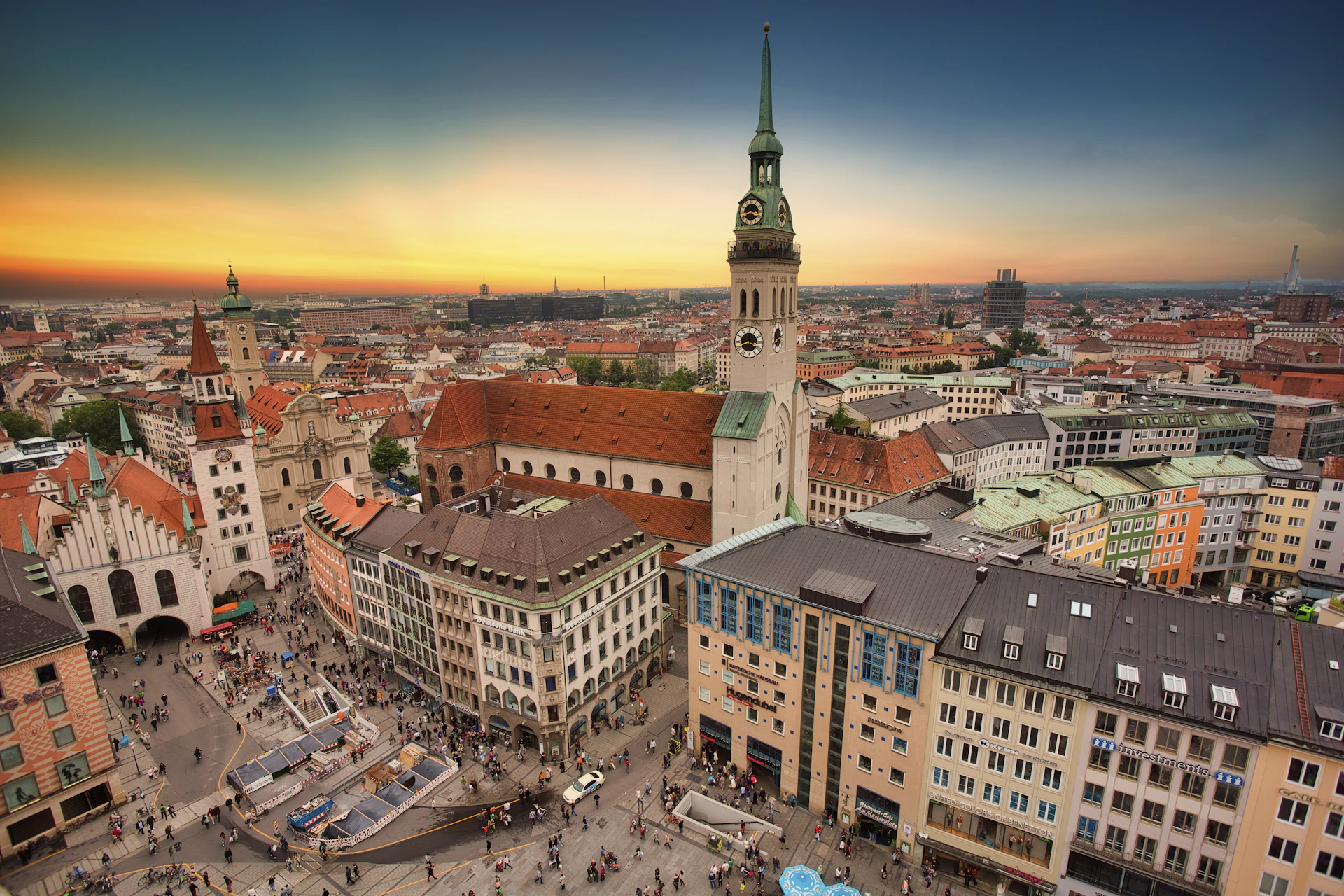
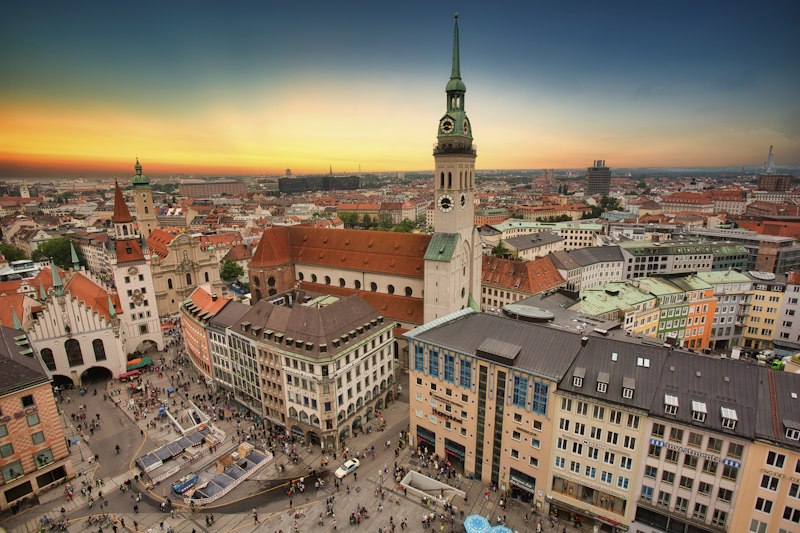
Munich is Germany's most enthusiastic rental city — because everywhere worth going is accessible by car and nowhere near enough by train. The A95 south delivers you to Garmisch-Partenkirchen (90 km, 75 min) and the base of Germany's highest peak, the Zugspitze. Follow the Romantic Road northwest to Neuschwanstein Castle (120 km) in King Ludwig II's incomparable fairytale setting. Southeast to Berchtesgaden (150 km) delivers Hitler's Eagle's Nest mountain retreat and the Königssee glacial lake — among Germany's most dramatic landscapes. West to Lake Constance (180 km) and Austria's Salzburg (145 km) for international flexibility.
Munich Franz Josef Strauss Airport (30 km northeast, the A9 Autobahn) is Germany's premium rental hub — Sixt's flagship fleet offers BMW 5-Series and Mercedes E-Class for Autobahn cruising from €110/day. Economy rates start at €42/day. The Munich Ring (A99) bypasses the city centre; use the Park & Ride system (€1.30 flat rate includes U-Bahn into Marienplatz) to avoid the expensive Innenstadt parking.
Frankfurt
Hesse · Germany's Gateway Airport · Autobahn Hub
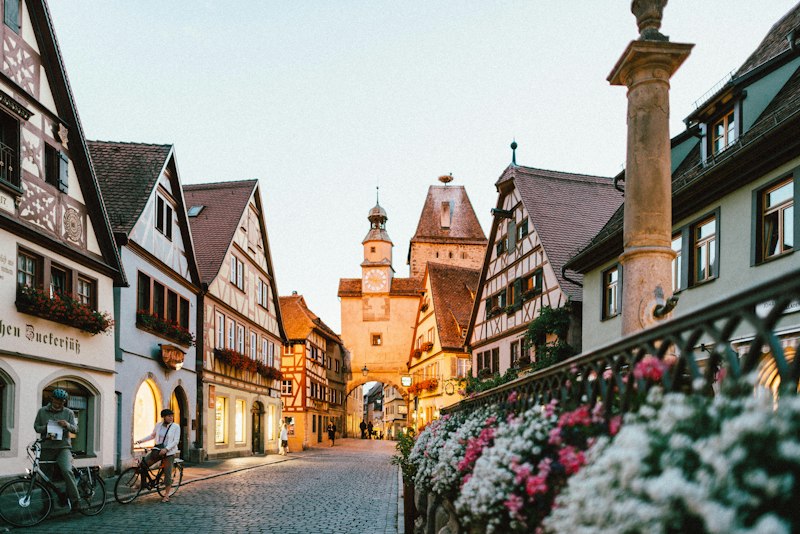
Frankfurt Airport is Germany's car rental capital — the continent's most comprehensive rental centre with every major brand in a single terminal building. The city itself (nicknamed Mainhattan for its high-rise skyline above the River Main) rewards a morning's exploration, but most visitors collect in Frankfurt specifically to drive elsewhere. The A3 west connects to Cologne (190 km, 1.5 hrs), Heidelberg (90 km, 45 min) and the Rhine Valley wine towns of Rüdesheim and Bacharach (70 km). The A66 east leads to Würzburg and the Romantic Road start (120 km). North on the A5 reaches Kassel and the Fairy-tale Route.
Frankfurt Airport Terminal 1 and Terminal 2 both house rental desks — pick whichever corresponds to your arriving airline. Rates start from €38/day for economy cars. The A3/A5 interchange (Frankfurter Kreuz) is Germany's busiest Autobahn junction — arrive or depart outside rush hour (7–9am, 4–7pm) to avoid congestion. The A5 south to Heidelberg and the A3 west toward the Rhine deliver some of Germany's most rewarding Autobahn driving.
Hamburg
Hamburg City-State · Northern Gateway
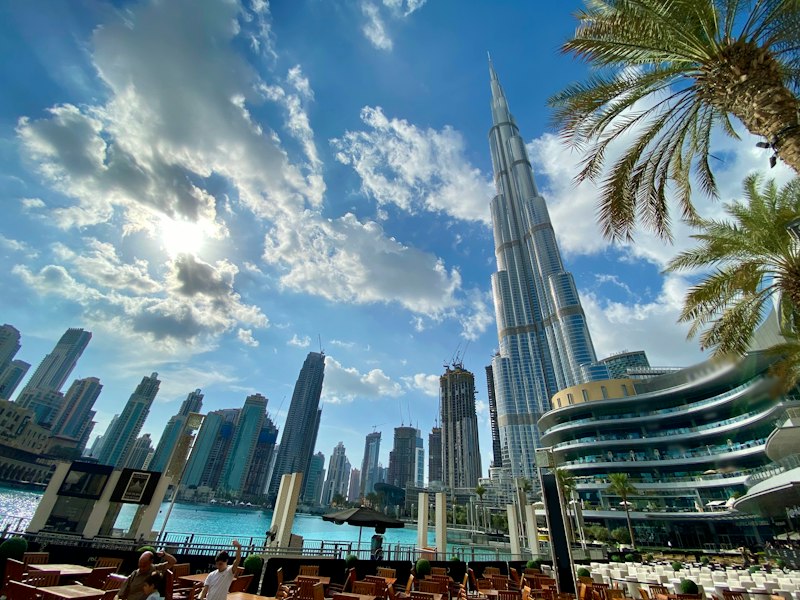
Hamburg Airport's proximity to the city centre (8 km north, unusually convenient for a German airport) makes collecting a rental car exceptionally straightforward. The Elbphilharmonie's 2,100-seat concert hall cantilevered above the port, the UNESCO Speicherstadt red-brick warehouse district and Miniatur Wunderland (the world's largest model railway system, 1,500 m of track) justify 2–3 days in the city. A car then opens the north: Lübeck's Holsten Gate and Hanseatic old town (70 km east on the A1), the Baltic coast resorts of Travemünde and Heiligendamm, and the Schleswig-Holstein dune islands accessed via causeways.
The A1 north connects Hamburg to Denmark (Copenhagen 330 km, 3 hrs via the Øresund Bridge — no border formalities in Schengen). City-centre parking uses the EasyPark or Park Now apps with Parkhaus garages at €2–3/hour. Economy rates start from €38/day; the A7 south connects Hamburg to Hanover (150 km) and continues all the way to Munich (800 km) on one of Germany's longest Autobahn routes.
Cologne
North Rhine-Westphalia · Germany's Cathedral City
Cologne's twin-spired Gothic Cathedral (Dom) — 632 years in construction, completed 1880 — is Germany's most visited landmark and visible from 50 km away across the Rhine plain. Cologne Bonn Airport (15 km southeast) offers rental desks from Sixt, Europcar, Hertz, Avis and Enterprise. The B9 road south from Cologne along the west Rhine bank is one of Germany's most rewarding scenic drives, passing Koblenz (90 km) where the Rhine and Moselle rivers converge at the Deutsches Eck (German Corner). Continue south through the Middle Rhine UNESCO gorge — 40 castle ruins in 65 km between Koblenz and Rüdesheim.
Düsseldorf (40 km north on A57) adds fashion-week glamour to the itinerary. The Eifel National Park (50 km west) is Germany's westernmost upland area, home to volcanic crater lakes (Maare) and the Belgian border forests. Economy rates from €35/day. Cologne's pedestrian zones ban cars from the Altstadt core — park on the east bank and walk across the Hohenzollern Bridge (padlocks and all) into the Dom quarter.

Stuttgart
Baden-Württemberg · Mercedes · Porsche · Black Forest
Stuttgart is the most automotive city on earth. The Mercedes-Benz Museum (free admission, 160 vehicles spanning 130 years) and the Porsche Museum (75 original racing and road cars) sit within 15 km of each other and Stuttgart Airport — making the city a pilgrimage destination for any car enthusiast. Collecting a BMW, Mercedes or Audi here and driving it down the A81 into the Black Forest feels entirely appropriate. The Schwarzwald-Hochstrasse ridge road (60 km west on the B500) delivers panoramic pine-forest driving across the Black Forest's highest terrain.
Heidelberg (120 km north on the A6) is the quintessential German romantic city — red sandstone castle ruins above a baroque university town. Lake Constance (Bodensee, 180 km south on the A81) offers German-Swiss-Austrian border culture and some of Germany's warmest swimming in summer. Stuttgart Airport economy rates from €40/day. Premium vehicles (Mercedes C-Class, BMW 3-Series) from €85/day — lower than Frankfurt or Munich for equivalent quality.
Dresden
Saxony · Rebuilt Baroque Capital · Czech Gateway
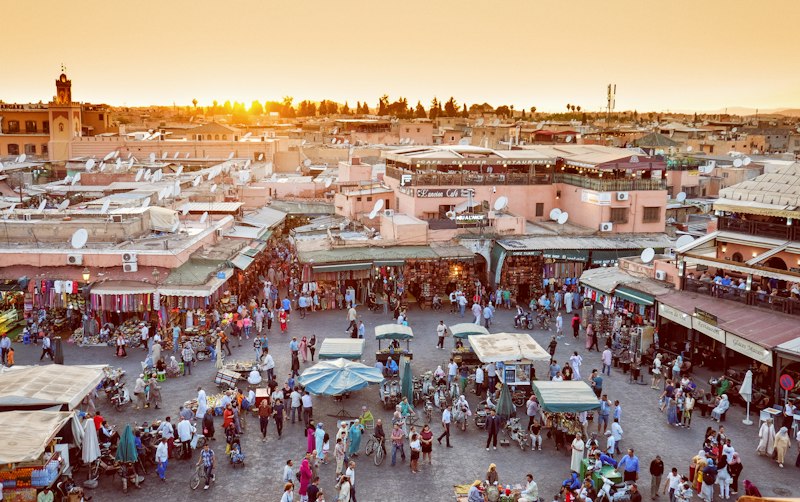
Dresden's story is one of destruction and extraordinary rebirth. The Frauenkirche, levelled in the 1945 Allied firebombing and painstakingly reconstructed from the original stones between 1994–2005, stands as Europe's most powerful symbol of post-war reconciliation — its copper dome visible across the Elbe's baroque skyline. Dresden Airport (9 km north) offers economy rates 10–15% below western German averages, making it excellent value. Saxon Switzerland National Park (30 km southeast on the S172 via Pirna) is a must: the sandstone formations and Bastei Bridge viewpoint are genuinely spectacular and entirely unlike anything else in Germany.
Prague is 150 km south on the D8/A17 motorway — no border formalities in the Schengen zone, toll-free from the German side. Leipzig (115 km west) is Bach's city, home to the Thomaskirche where he directed the choir. Meissen (25 km northwest on the B6) is the home of European porcelain, with the original 1710 manufactory still producing hand-painted pieces. Dresden offers the best-value gateway into eastern European road trips from any German city.

Nuremberg
Bavaria · Medieval City · Romantic Road Gateway
Nuremberg (Nürnberg) is the authentic Bavarian medieval city — less internationally famous than Munich but arguably more rewarding for historical depth. The imperial Kaiserburg castle, the Germanic National Museum and the Nuremberg Trials Memorial together span 600 years of German history in a single walkable city. Nuremberg Airport (6 km north) is Bavaria's second airport with rental desks from Sixt, Europcar and Hertz at economy rates from €38/day. The Romantic Road begins at Würzburg (110 km northwest on the A3) and runs 460 km south to Füssen and Neuschwanstein Castle — Germany's most iconic road trip, best done over 3–4 days in a comfortable estate or SUV.
The Christkindlesmarkt (Christmas market) from late November to Christmas Eve is Germany's most famous — the entire Altstadt transforms under 180 stalls of mulled wine, gingerbread and hand-carved ornaments. Book rental cars months in advance for the December Christmas market period — demand is extreme. Munich is 170 km south on the A9, a smooth 90-minute Autobahn drive with no speed limits north of the city.
Düsseldorf
North Rhine-Westphalia · Fashion · Rhine-Ruhr Gateway
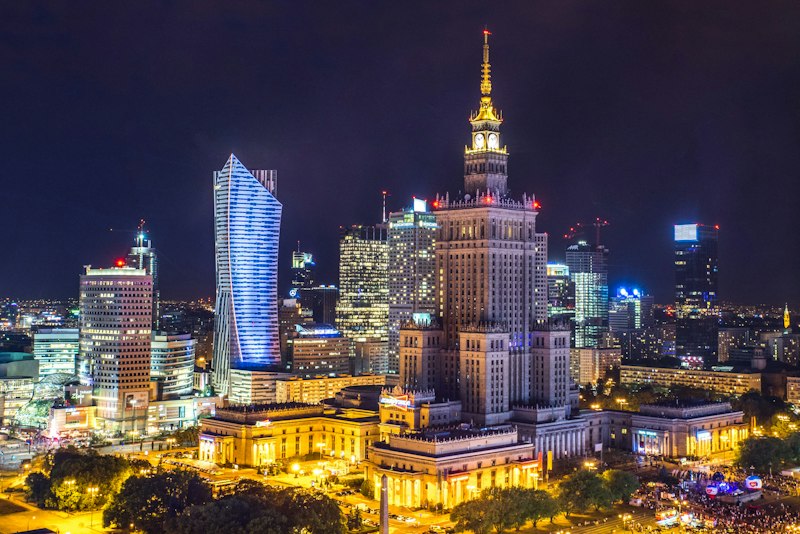
Germany's fashion capital and Japan's European cultural home (the largest Japanese community in Germany), Düsseldorf sits at the northern edge of the Rhine-Ruhr megalopolis — 18 million people in Germany's most economically powerful region. Düsseldorf Airport (8 km from the city) connects to all major German cities and offers rental rates from €36/day — consistently among Germany's most competitive. The Altstadt's Königsallee (Kö) boulevard and Rhine promenade are walkable; use a car to reach Cologne (40 km south on the A57), the Ruhr Valley's industrial heritage museums in Essen (Zeche Zollverein UNESCO, 30 km east), and the Eifel National Park's volcanic crater lakes (60 km west).
Aachen Cathedral (70 km southwest on the A44) is Germany's oldest cathedral and Charlemagne's burial place — a UNESCO World Heritage Site of profound European significance. The Netherlands border (Venlo 55 km west, Amsterdam 250 km) makes Düsseldorf a natural base for Benelux road trips. Belgium (Brussels 240 km southwest) is equally accessible. The A3 and A57 connect fluidly to Frankfurt (190 km south) and Hamburg (430 km north) via unlimited-speed Autobahn.
Car Rental Rates Across Germany
Average daily rates in Euros (€) at major German airports — inclusive of CDW insurance, Umweltzone sticker and GPS navigation
| City / Airport | Daily Rate (€) | Best Vehicle | Most Popular Route |
|---|---|---|---|
| Frankfurt Airport (FRA) | €38 – €90 | Economy / BMW / Mercedes | Rhine Valley · Heidelberg · Romantic Road start |
| Munich Airport (MUC) | €42 – €120 | BMW 5-Series / Mercedes E | Neuschwanstein · Bavarian Alps · Salzburg Austria |
| Berlin BER Airport | €40 – €85 | Economy / SUV / EV | Potsdam · Spreewald · Dresden · Hamburg |
| Hamburg Airport | €38 – €80 | Economy / Estate | Lübeck · Baltic Coast · Copenhagen Denmark |
| Düsseldorf Airport (DUS) | €36 – €75 | Economy / Business Sedan | Cologne Cathedral · Rhine Gorge · Netherlands |
| Stuttgart Airport (STR) | €40 – €130 | Mercedes / Porsche / BMW | Black Forest · Porsche Museum · Lake Constance |
| Cologne Bonn Airport (CGN) | €35 – €70 | Economy / Sedan | Middle Rhine · Moselle Vineyards · Belgium |
| Dresden Airport (DRS) | €35 – €65 | Economy / Compact | Saxon Switzerland · Prague · Leipzig |
| Nuremberg Airport (NUE) | €38 – €72 | Economy / Estate / SUV | Romantic Road · Regensburg · Munich |
| Leipzig/Halle Airport (LEJ) | €33 – €60 | Economy / Compact | Bauhaus Dessau · Harz Mountains · Berlin |
Why Travellers Choose CarRental.net.in in Germany
500+ German Locations
All 16 federal states covered — Sixt, Europcar, Hertz and Buchbinder partnerships maintain consistent German quality benchmarks at every location.
No Hidden Charges
All-inclusive pricing: CDW, Umweltzone sticker, GPS and ADAC roadside assist stated upfront. Zero surprises at collection or return.
24 × 7 ADAC-Backed Support
German-speaking and English helpline. ADAC partnership provides Europe's most comprehensive roadside assist network — free towing on all routes.
Autobahn-Optimised Fleet
BMW, Mercedes, Audi and VW vehicles maintained to factory specification for safe, reliable performance at Autobahn speeds.
Sanitised Fleet
Professional deep-clean before every collection. All high-contact surfaces disinfected to German DIN hygiene standards.
Flexible Booking
Confirm your rental in 2 minutes online. Free cancellation up to 48 hours before collection. Instant email confirmation in English and German.
Essential Driving Rules for Germany
Frequently Asked Questions About Renting in Germany
Around 70% of Germany's 13,000 km Autobahn has no posted speed limit — indicated by a white sign with a black diagonal slash through a speed number. On these sections, the advisory speed is 130 km/h but it carries no legal force. The remaining 30% carries variable limits of 100–130 km/h in construction zones, urban approaches and areas with accident history. Electronic overhead signs show current limits. The critical rules: overtake on the left only (passing on the right is illegal and heavily fined), always keep right when not actively overtaking, and check your mirrors constantly — cars genuinely approach at 200–230 km/h in the left lane on unrestricted sections. A BMW 5-Series or Mercedes E-Class handles these speeds with complete composure.
No. Germany's entire Autobahn network is completely free for private cars — there are no toll booths, no vignettes (stickers) and no electronic tags required. This is unique in Europe: France charges €70–85 for Paris to Nice, Italy has tolls throughout, Austria requires a Vignette, and Switzerland uses an annual sticker. Germany funds its motorways through fuel taxes. The only exceptions are a small number of river tunnels and bridges that charge €3–4 (Herrentunnel in Lübeck, Warnowtunnel in Rostock) — these are rare and avoidable. Budget your German road trip for fuel (~€1.75–1.90/litre), parking in cities (€2–4/hour), and accommodation only.
EU and EEA driving licences are fully valid in Germany. Non-EU visitors — including those from the USA, Canada, Australia, the UK (post-Brexit), Japan, India and Singapore — must carry a valid International Driving Permit (IDP) alongside their home country licence at all times. German police enforce this consistently, and rental companies may refuse vehicle handover if you arrive without one. Obtain your IDP from your national automobile association before departure: AAA in the USA, the AA or RAC in the UK, CAA in Canada, NRMA or RACQ in Australia, and JAF in Japan. An IDP costs around €15–30 and is valid for one to three years. Always carry both your home licence and your IDP together whenever you drive in Germany.
Umweltzonen (environmental zones) are low-emission areas in German city centres that require vehicles to display a coloured environmental sticker (Umweltplakette) to enter. The green sticker (Grüne Plakette) permits entry to all Umweltzonen and is issued to vehicles meeting Euro 4 emission standards or better — essentially all modern rental cars. When you collect your rental vehicle, the green sticker will already be displayed in the windscreen. Affected cities include Berlin, Munich, Frankfurt, Cologne, Stuttgart, Hamburg, Düsseldorf, Hanover, Leipzig and Dresden. Entering an Umweltzone without the correct sticker carries an €80 fine — but since all rental cars carry the green sticker automatically, this is not a concern in practice. The Autobahn itself has no Umweltzone restrictions.
Fuel is not included in German rental rates. Standard full-to-full policy applies: collect with a full tank, return full. Most German rental cars use unleaded petrol (Super or Super Plus — 95 or 98 octane) or diesel (Diesel). Economy cars and compacts typically use regular Super (95 octane, called "Super" at the pump). Premium BMWs, Mercedes and Audis often require Super Plus (98 octane) for optimum Autobahn performance — check the fuel cap. Current German fuel prices: Super 95: ~€1.75–1.85/litre; Diesel: ~€1.65–1.75/litre. Autobahn Raststätten (service areas) are consistently 15–20% more expensive than Supermarkt (supermarket) petrol stations in towns — fill up at Aral, Shell, ESSO or AVOS in town centres to save costs. Autobahn service areas appear every 40–60 km and are clearly signed.
Yes — all Schengen Area borders (France, Belgium, Netherlands, Luxembourg, Austria, Switzerland, Czech Republic, Poland, Denmark) are open crossings with no passport or vehicle checks for EU-registered rental cars. Inform your rental company if you plan cross-border travel; most permit it within the EU/Schengen zone. Switzerland requires a Vignette (annual motorway sticker, CHF 40, purchased at the border) even for short transits — rental companies sometimes supply this or charge separately. UK visitors note that the UK is no longer in Schengen, but driving on an EU rental car into the UK requires specific permission and a Green Card insurance document — confirm with your rental company before attempting this route. Austrian Autobahn also requires a Vignette (€9.90 for 10 days). All other neighbouring crossings are completely free.
Basic rental includes third-party liability and Collision Damage Waiver (CDW) with a standard excess of €700–1,500. Super CDW reduces this excess to €0–300 and costs €18–35/day — worthwhile for city parking in tight German spaces and Autobahn high-speed motoring. Theft protection is typically included in CDW packages. Windscreen and tyre damage is often excluded from basic cover; German road debris and gravel on construction zone approaches makes this a sensible €8–12/day add-on. Check your credit card policy first — many premium Visa and Mastercard products cover German CDW excess when the rental is charged to the card, saving you significant daily costs. Always conduct a thorough walk-around inspection with the rental agent and photograph every panel before departing — German operators are efficient but precise about damage documentation.
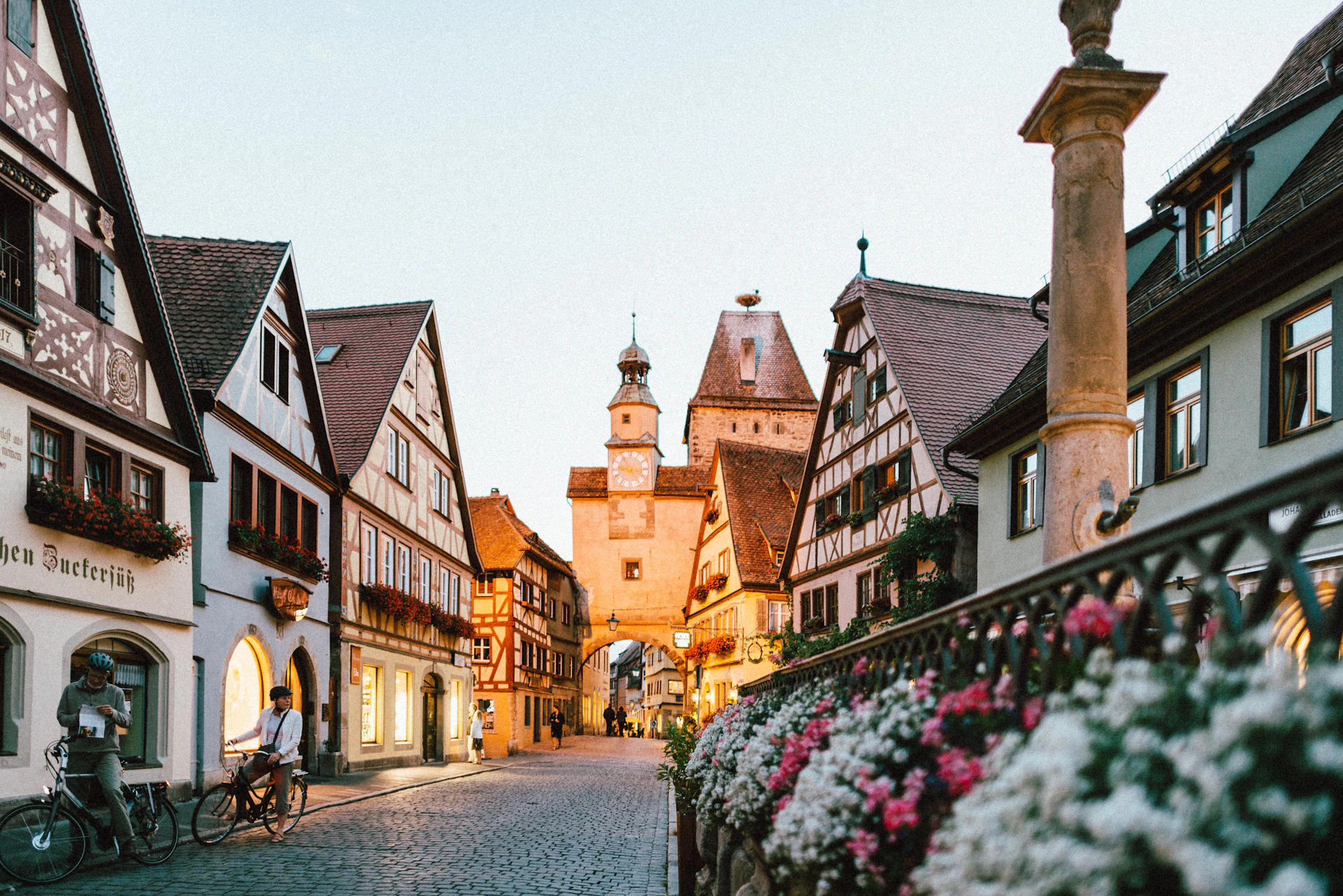
Late spring (May–June) and early autumn (September–October) deliver the best conditions: mild temperatures, green landscapes, manageable tourist crowds and competitive rental rates. May is excellent for the Rhine Valley (vineyards in bud), Black Forest walks and Bavaria before Oktoberfest crowds arrive. October brings the Oktoberfest period (mid-September to early October) — rates spike around Munich but the festival is genuinely spectacular. November to March is low season for rental rates but high season for Christmas markets (late November to December 24) — Nuremberg, Cologne and Rothenburg ob der Tauber Christmas markets are among Europe's finest, and demand for vehicles spikes in these cities specifically. Summer (July–August) is school holiday peak season — rates rise 20–35% and popular Bavarian routes become busy. Book 4–8 weeks ahead for May–October; 2–3 months ahead for Christmas market period and Oktoberfest.
Book 4–8 weeks in advance for early-bird rates saving 20–35%. Use aggregators — Rentalcars.com, AutoEurope, and CarTrawler compare Sixt, Europcar, Hertz, Avis and Buchbinder simultaneously. German specialist Buchbinder consistently undercuts international brands by 15–20% with comparable quality. City-centre desks (train station Sixt or Europcar counters) sometimes beat airport rates by €5–10/day, saving taxi fares into the city. Manual transmission: Germany's rental market is 50/50 manual/automatic — manuals are €8–12/day cheaper for economy cars. Weekly rates offer substantially better value: a 7-day rental rarely costs 7× the daily rate. Decline duplicate insurance if your credit card or travel policy covers German CDW. Off-peak months (November, January, February) deliver the lowest rates — economy VW Polo or Opel Corsa from €33/day with advance booking.
Contact Our Germany Team
English and German-speaking team available 24 × 7 for bookings, route planning and any rental query